

Why do we celebrate Valentine’s Day on February 14th?
We celebrate Valentine’s Day on February 14 because it’s tied to Saint Valentine’s feast day—and years later, medieval Europe connected that date with romance and “courtly love.” Today, it’s a layered mix of tradition, poetry, and modern gifting.
If you’ve been searching for why we celebrate Valentine’s Day, you’re not alone. Most of us celebrate it every year… without really knowing where it came from (or why the story keeps changing depending on the website).
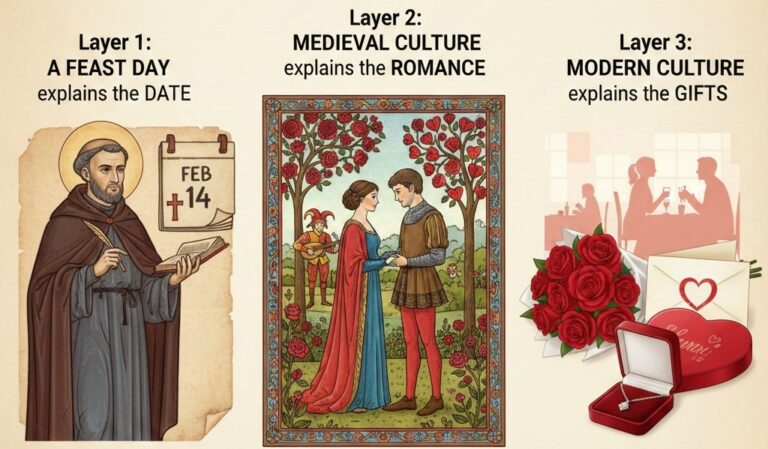
The Real Valentine’s Day Story: 3 Layers Behind Feb 14
Valentine’s Day doesn’t have a single origin. It’s three stories stacked—and each layer explains a different part of what we do today.
Layer 1: A feast day explains the date
February 14 is linked with Saint Valentine in the Christian tradition.
Layer 2: Medieval culture explains the romance
Valentine’s Day wasn’t always “romantic.” Major historians explain that the romantic association strengthened much later, especially in the Middle Ages.
Layer 3: Modern culture explains the gifts
The cards, flower bouquets, chocolates, jewellery, and dinner plans—those are modern habits that have evolved over time as the holiday has become more commercial and widely celebrated.
This is the cleanest way to understand why we celebrate Valentine’s Day story today:
a date steeped in tradition, romance from medieval ideas, and gifting from modern culture.
Why do we celebrate Valentine’s Day on February 14?
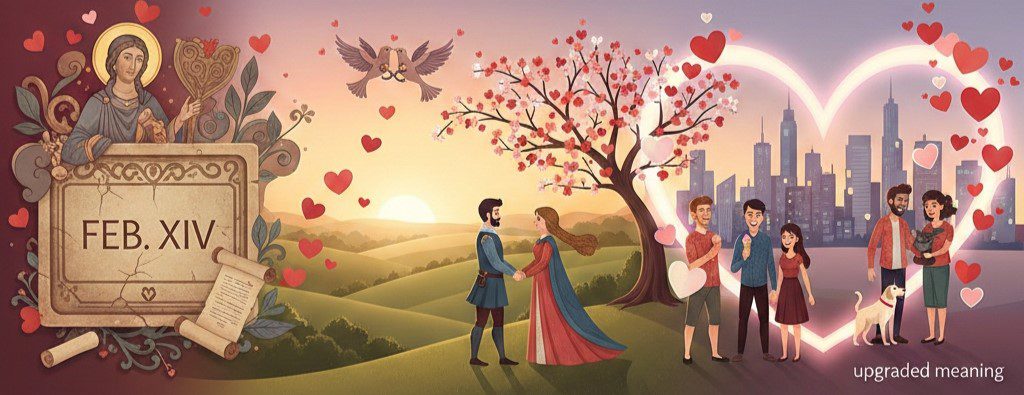
Because February 14 is associated with Saint Valentine’s feast day, the date remained anchored even as its meaning evolved.
Here’s what surprises most people:
- The date is old
- The “romance” meaning is newer
According to History.com, during the Middle Ages, it was commonly believed in France and England that Feb 14 marked the beginning of birds’ mating season, which helped romantic symbolism stick.
Britannica also mentions this mid-February bird/mating symbolism as part of the holiday’s later romantic imagery. So, if you’ve wondered why we celebrate Valentine’s Day today, a big part of the answer is that we kept the same date—but continually upgraded the meaning until it became the world’s “official love day.”
Who was Saint Valentine? (Fact vs. legend)
Britannica explains that Saint Valentine probably refers to one or two legendary Christian martyrs, and details are limited. It also notes he was removed from the General Roman Calendar in 1969 due to a lack of reliable information, though he is still recognized as a saint. Even more interesting: the Associated Press highlights that there were multiple saints named Valentine and that stories about them may have been exaggerated over time.
The two legends you’ll see everywhere
The “secret marriages” legend
One popular version claims that Valentine secretly performed marriages, defying the emperor’s orders. It’s widely told as part of the folklore around the day.
The “from your Valentine” myth
Another common tale says he sent a final message signed “from your Valentine.” It’s hard to prove historically, but it became part of the holiday’s romantic identity.
People don’t fall in love with footnotes. They fall in love with stories. That’s why these legends live on.
Lupercalia And Valentine Connection Explained
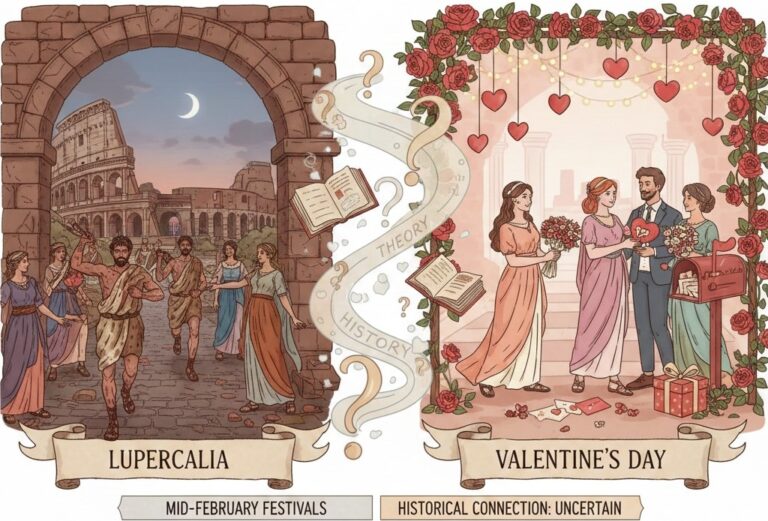
Valentine’s Day may come from Lupercalia, an ancient Roman festival that took place in mid-February. This festival included rituals for fertility and traditions for pairing people. However, not all historians agree on the degree of connection between these two events.
According to TIME, while many people associate Lupercalia with Valentine’s Day because they occur around the same time, there is little strong evidence that Lupercalia was actually a celebration of matchmaking and romance, as we think of it today. The idea that Lupercalia directly transformed into Valentine’s Day is often overstated.
The AP also sheds light on this topic, noting that the origins remain unclear and presenting multiple theories while stressing the uncertainty surrounding the popular narrative.
In conclusion, although Lupercalia and Valentine’s Day are celebrated close together in the calendar, the idea that one directly replaced the other is not a universally accepted historical fact.
Why we celebrate Valentine’s Day today?
Even with complicated origins, the holiday survives because it meets modern emotional needs.
Here’s the real-world logic:
- Many people struggle to express feelings consistently.
- Valentine’s Day gives a socially accepted moment to do it.
- It provides a script (a card, a message, a gesture) when words are hard.
Of course, modern gifting culture amplified it into a major event.
Valentine’s Day is a day to show love. People celebrate it on February 14 by doing thoughtful things for each other. Many give gifts like flowers or chocolates, have a special dinner, or spend time together. Some show love by helping others without being asked, or by celebrating with friends and family, not just couples. If you are running short of time, the best way is to send flower combos with cakes and chocolates with Same-Day Delivery.



Why we celebrate Valentine Week
Valentine’s Week turns one day into a countdown, making it easier to participate. Instead of one “big gesture,” it’s small daily moments: Rose Day, Propose Day, Chocolate Day, Promise Day, Hug Day, and more.
So why did it blow up?
- Social media loves daily themes (Reels, stories, couple posts, trend audios)
- Brands love weekly campaigns (daily gifting prompts)
- People love small gestures (they feel more personal than one expensive gift)
Valentine’s Week became popular because it aligns with the way we live now—fast, online, shareable, and built around mini-moments.
Quick Valentine Week gift ideas (short and Real)
Rose Day: Single rose with one heartfelt note
Chocolate Day: A small chocolate box + a quick voice note.
Promise Day: One promise you can actually keep.
Hug Day (long-distance): A “virtual hug” letter with one photo memory.


How to celebrate Valentine’s Day without pressure (simple + human)
If Valentine’s Day feels stressful, keep it simple.
The “3 Gifts Rule” (works for any budget)
- Something to read, like a note, letter, or card
- Something to feel like Valentine’s flowers, fragrance, a keepsake
- Something to taste like cakes and chocolates
For a simple romantic pick, Valentine’s Day roses are always a safe choice, check our Valentine’s Day Rose Guide for quick help choosing.

Conclusion
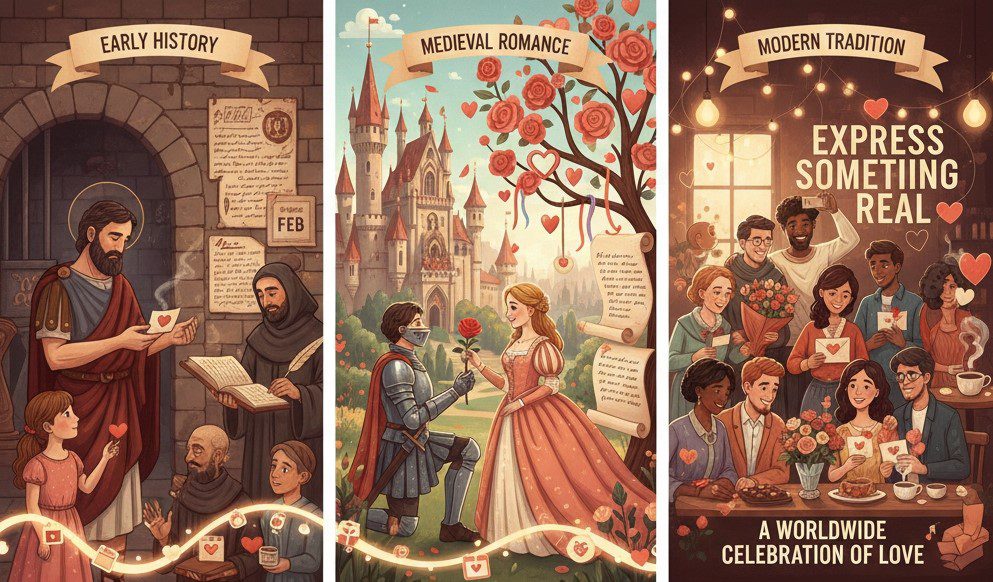
Valentine’s Day on February 14 didn’t follow a single simple story—it evolved over time. The date remained connected to Saint Valentine; medieval culture added romance, and modern life transformed it into a worldwide tradition of love and gift-giving. This year, don’t celebrate to “prove” anything. Celebrate to express something real.
Valentine’s Day History, Meaning & Traditions FAQs
Why do we celebrate Valentine's Day on February 14th?
Because February 14 became linked to Saint Valentine’s feast day, and later medieval culture associated that date with romance and courtly love.
What is the dark truth about Valentine's Day?
The “dark truth” is that the origin story is uncertain and often oversimplified, and modern Valentine’s Day is heavily shaped by commercial gifting and social pressure.
Is Valentine's Day really based on Lupercalia?
Some historians and sources suggest a link due to timing, but others say there’s little concrete evidence for a direct connection, and the popular story is often overstated.
Who was Saint Valentine?
“Saint Valentine” likely refers to more than one martyr, and reliable historical details are limited; therefore, different versions of the story exist.
Why do we celebrate Valentine's Week?
Valentine’s Week is a modern extension that builds excitement through daily mini celebrations leading up to February 14, making it easy for people to participate and share moments.
What is the history of Valentine's Day for students in simple words?
It began as a saint’s feast day, later became associated with romance in the Middle Ages, and eventually evolved into a global gift-giving tradition featuring cards, love and romance flowers, and chocolates.