

How to Preserve Your Valentine’s Rose Bouquet: Dry, Press, Frame
Want to keep your Valentine roses forever? Dry them (air-dry or silica gel), press petals for framing, or seal fully dried blooms in resin. These simple DIY methods turn a fresh bouquet into a lasting keepsake.
Nothing brings a smile quite like a bouquet of roses on Valentine’s Day. While fresh roses usually last about a week, they often start to wilt surprisingly quickly. Use simple preservation methods, such as hanging to dry, pressing petals, or framing blooms, to turn them into lasting keepsakes.
Preserving roses lets you keep the memories they hold, whether you received a single rose or a bouquet of roses. No matter the rose numbers, here are some simple, step-by-step ways to dry your roses and hold onto those special moments. Roses have symbolised love for centuries. Explore the history of gifting roses on Valentine’s Day to see how this romantic tradition began. If you’re wondering how to preserve your Valentine’s Day flowers, you’re in the right place!
How to Preserve Roses for One Day: Quick Prep Steps
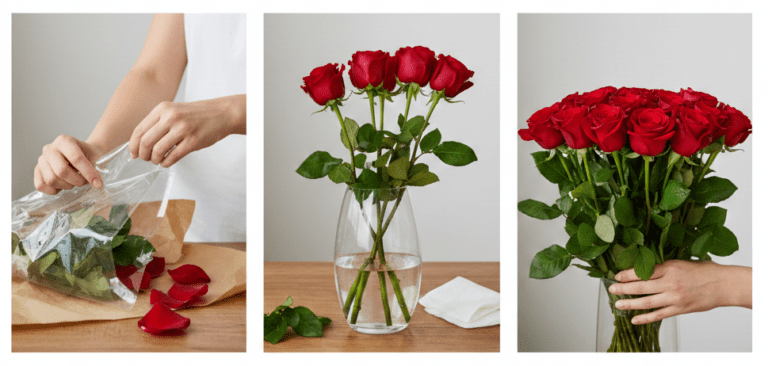
1. Unwrap the Bouquet
To prevent your roses from wilting, remove the plastic wrap. Loosen or remove the decorative paper to facilitate improved airflow around the flowers.
2. Trim Rose Stems Properly
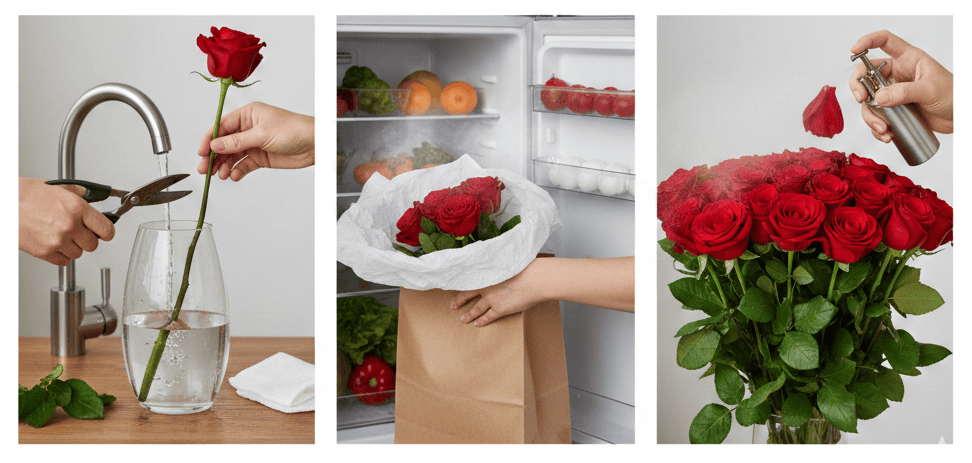
Cut 1 to 2 inches off each stem at a 45° angle under running water for better water absorption.
3. Use a Clean Vase and Correct Water Level
Wash and clean the vase well and fill it with room-temperature water, covering only half of the stem to prevent bacterial growth
4. Keep Roses Cool
Keep roses in a cool, dark place away from heat and AC. Refrigerating a loosely wrapped bouquet in tissue or a paper bag gives an overnight freshness
5. Quick Refresh Before Display
Lightly mist the bouquet and remove any drooping outer petals to refresh the roses for photos or eve
These quick steps are the most effective way to preserve roses for one day while keeping them fresh, hydrated, and visually appealing.
Before You Preserve: Prep Your Roses for Different Methods
Before preserving roses, it is essential to properly prepare them. This part may seem minor, but it plays a significant role in how your roses look weeks or even years later. Skipping preparation often leads to faded colour, misshapen petals, or mould—no matter how good the preservation method is. Rose colours and numbers play an important role on Valentine’s Day as they affect drying—single stems set neatly, while bigger red or pink bouquets need extra spacing to keep their shape and shade.
Step 1: Pick the Right Roses First
Choose firm, fresh, slightly closed roses with smooth petals for preservation. Avoid bruised or dark-edged roses, as not every rose is good for preservation. Best rose varieties for Valentine’s Day choices include classic red roses, soft pinks, elegant whites, peach tones, and premium long-stem Ecuadorian roses for a fuller, luxurious look.
Step 2: Clean Up the Flower Gently
Remove brown, torn, or damaged outer petals, as they can affect the final appearance. Next, strip most of the leaves from the stem, as they tend to retain moisture, which can cause mould or uneven results during drying or sealing.
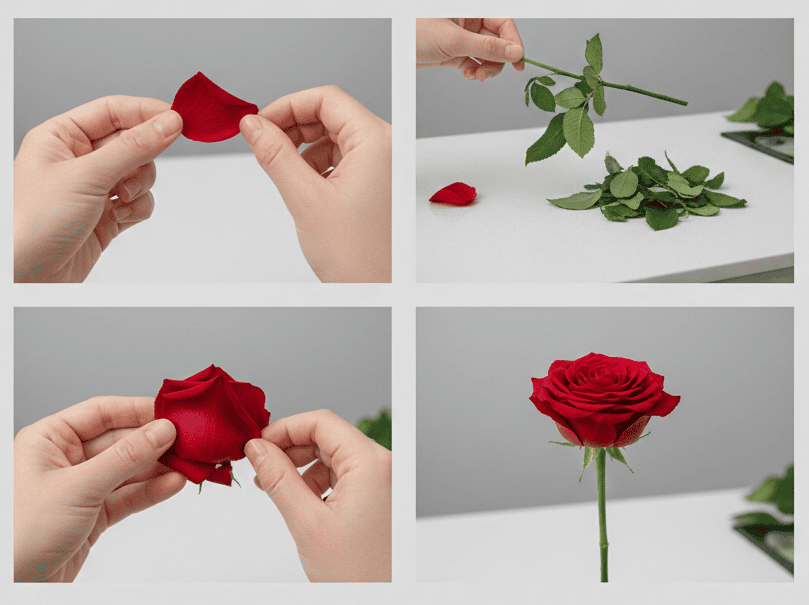
Step 3: Make Sure the Rose Is Completely Dry
Moisture on the surface of the rose can cause problems later, especially with glycerin, silica gel, or resin methods. Gently pat the petals and stem dry with a soft tissue or cloth. Check the stagnant water trapped between the overlapping petals. The rose should feel dry but not stiff.
Step 4: Decide What You Want to Keep
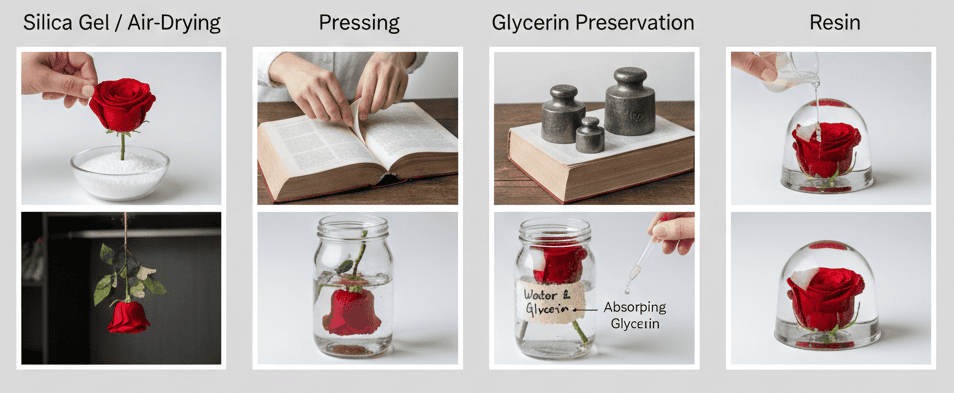
- If you want the rose to keep its natural shape, drying methods like silica gel or air-drying work best.
- For a flat keepsake or framed memory, pressing is the right choice.
- If you prefer a soft, flexible flower that still feels fresh, glycerin preservation is ideal.
- For long-term keepsakes like paperweights or jewellery, resin offers a permanent finish.
How to Preserve a Rose Bouquet: 5 DIY Methods That Really Last
Air-drying is one of the easiest ways to keep your roses. You just need a bit of string or a rubber band, a hanger or hook, and a cool, dark, dry spot.
How to Air-Dry a Rose Bouquet
1) Split the bouquet into small bunches
Don’t dry the whole bouquet at once. Instead, separate it into groups of 3 to 6 stems for easier airflow around each rose, which helps dry evenly and prevents moisture from getting trapped.
2) Tie the stems (firm, not tight)
Use a string or a rubber band to secure each bunch snugly, without crushing the stems, as roses tend to shrink while drying.
3) Hang them upside down in a dark, dry place
Hang each flower bunch upside down from a hook in a dry, shaded spot, like a closet. It is better to avoid humid places, such as kitchens and bathrooms.
4) Let them dry fully
Most roses take 1–2 weeks to dry, and larger blooms can take up to 3 weeks. The thin, papery petals and rigid stems indicate dryness.
5) Optional: help reduce petal shedding
After they dry, a light mist of clear floral sealant or hairspray can help keep petals in place. Make sure that it won’t be soaked.
Common mistakes to avoid
- Hanging roses in sunlight, which fades the colour
- Trying to preserve roses that are already drooping
Roses retain their shape when drying starts, so freshness is always better.
Silica Gel Drying (For Best Shape and Colour)
To preserve roses and keep them looking fresh, use silica gel rather than air-drying. You will need silica gel, an airtight container, and a soft brush for cleanup.
How to Preserve Roses with Silica Gel
- Prepare the container by pouring a one to two-inch layer of silica gel at the bottom.
- Handle the rose gently. Position it vertically and choose whether to retain or discard the stem.
- Cover the petals slowly: Gently pour silica gel around the petals.
- Seal and store: Close the container tightly and store it in a dry place.
- Wait before checking: Allow small roses to dry for 2-4 days and larger ones for 5-7 days.
- Clean the rose gently: After drying, lift the rose out and remove any remaining gel with a soft brush.
Notes
- Silica gel works best on fresh roses
- Handle dried roses gently as they’re fragile
- This method gives the most natural-looking preserved roses
Silica gel is one of the best choices for preserving a rose bouquet to last for years while maintaining its original form.
Preserve Roses with the Glycerine Method
If you want preserved roses that stay soft instead of dry and brittle, the glycerin method is a great option. It works by replacing some of the water inside the rose, helping the petals remain flexible.
What to Expect
Glycerin-preserved roses may show a slight darkening, especially in red varieties. The petals should feel smooth and leathery, not crunchy.
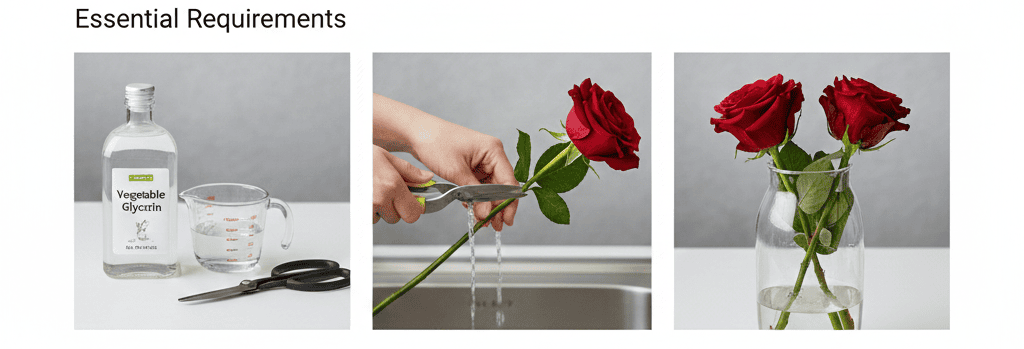
Essential Requirements
To effectively preserve roses using glycerin, you will need vegetable glycerin, warm water, a vase, and sharp scissors.
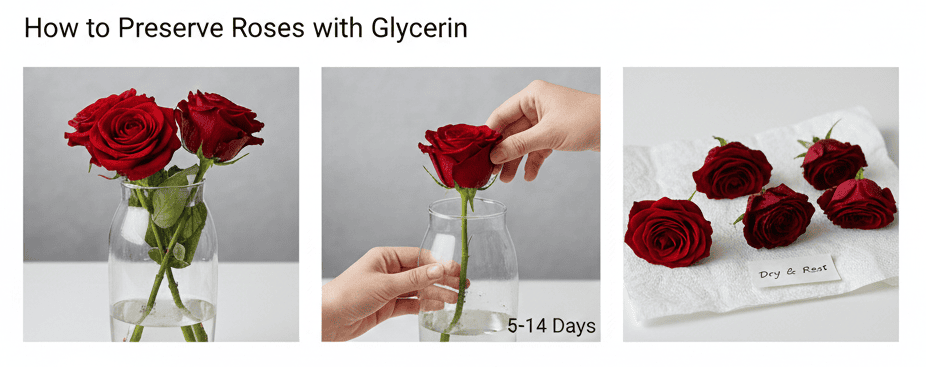
How to Preserve Roses with Glycerin
Mix one part glycerin with two parts warm water until fully blended. Recut the stems at an angle and keep the petals above the liquid for about 5 to 14 days. Once the petals soften, remove them, dry the stems, and let them rest on a sheet of tissue for a few hours.
Notes
- Store glycerin-preserved roses in a dry, dark place to keep them looking good.
- They are ideal as indoor decor or when you want a fresh appearance
Pressing Roses (Best for Flat Keepsakes and Frames)
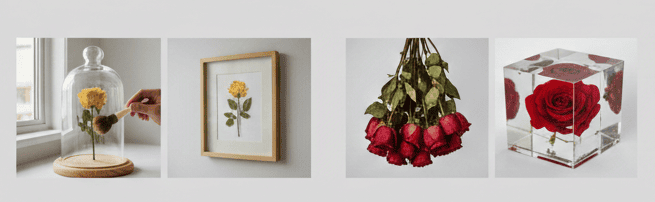
Drying roses is a simple way to preserve a bouquet, especially when working with loose petals or smaller flowers. Thicker roses don’t flatten evenly, but even though pressed roses lose their natural shape, they still hold the feeling and memories behind the bouquet beautifully.
What You’ll Need
A book or flower press, parchment paper or plain tissue, and a level, dry surface will be required.

How to Press Roses at Home
To press the roses, gently separate the petals and place the rose or its petals between two sheets of parchment paper to absorb moisture. Put the paper inside a heavy book, add some weight on top, and leave it alone for two to three weeks. Avoid opening the book often to maintain its shape. Once dry, handle them carefully, as pressed roses are delicate and ideal for frames or memory projects.
Notes
- Keep pressed roses away from humidity and direct sunlight
- Handle dried petals gently, as they tear easily

Framing ideas
- Floating frame with petals plus name and date
- Shadow box with pressed petals, ribbon, and note
- Add a small label: “14 Feb 2026” (or your date)

How to Preserve a Rose in Resin (Forever Keepsake)
Resin is one of the best ways to preserve a rose as a long-lasting keepsake. Once sealed, the flower is protected from air and moisture, making it ideal for display pieces like cubes or heart molds.
Important Note
Never place a fresh rose in resin. Roses must be fully dried first, or else the moisture may cause browning and bubbles.
What You’ll Need
Clear casting resin, a silicone mold, gloves, a dried rose, and tweezers or a toothpick.

Simple Resin Preservation Steps
First, dry the rose using silica gel. Then, mix the resin according to the instructions. Pour a thin layer into the mold and let it thicken a bit. Gently place the rose in the mold, then pour the resin in 2–3 thin layers. Allow it to cure fully for 24 to 72 hours.

Resin Ideas
Heart keepsakes, cube paperweights, petal keychains, or small desk displays.
Notes
- Avoid applying thick layers of resin.
- Mix the resin slowly to prevent bubbles.
- Always wear gloves and ensure good ventilation.

Quick Guide: Which Method Should You Choose?
- To preserve a rose for one day: Trim the stems, place in fresh water, and keep in a cool room
- To preserve a rose bouquet easily: Air-dry the flowers upside down
- For the best shape and colour long-term: Use silica gel drying
- To preserve roses without fully drying them: Try the glycerin method
- To preserve a rose forever (keepsake style): Dry the rose first, then seal it in resin
- For a minimal, aesthetic memory: Press the rose and frame it
Care Tips: Make Preserved Roses Last Longer
- Keep away from direct sunlight (fading)
- Avoid humidity (bathroom/kitchen)
- Don’t mist preserved roses
- Dust gently with a soft brush or cool air
In the end, preserving your Valentine’s roses is simple; you just need the right method to achieve the desired result. Air-dry the whole bouquet for an easy option, press for something frame-worthy, or opt for resin for a “forever” keepsake.
Frequently Asked Questions
How to preserve roses forever at home?
To create a “forever keepsake,” dry the rose thoroughly using silica and then preserve it in resin.
What’s the easiest way to preserve a rose bouquet?
Air-drying is the simplest method: tie small bundles and hang them upside down in a dark, dry space for 1–3 weeks.
Can I preserve roses without drying them?
Yes, use the glycerin method. It keeps roses softer than dried ones, although the color may deepen slightly.
Can I put fresh roses directly into resin?
No. Fresh roses contain moisture and can develop brown or bubbly spots. Dry first, then resin.