

6 Types of Funeral Flower Arrangements to Choose in Malaysia
Funeral flower arrangements in Malaysia commonly include condolence flower stands, funeral wreaths, casket sprays, sympathy baskets, condolence bouquets and special-shaped tributes. The right choice depends on your relationship with the deceased, where the flowers will be displayed and the family’s cultural or religious customs.
This guide explains what each funeral flower arrangement is, where it is normally placed and when it may be appropriate to send. For guidance on suitable colours, religious customs and delivery timing, refer to our funeral flower etiquette guide for Malaysia.

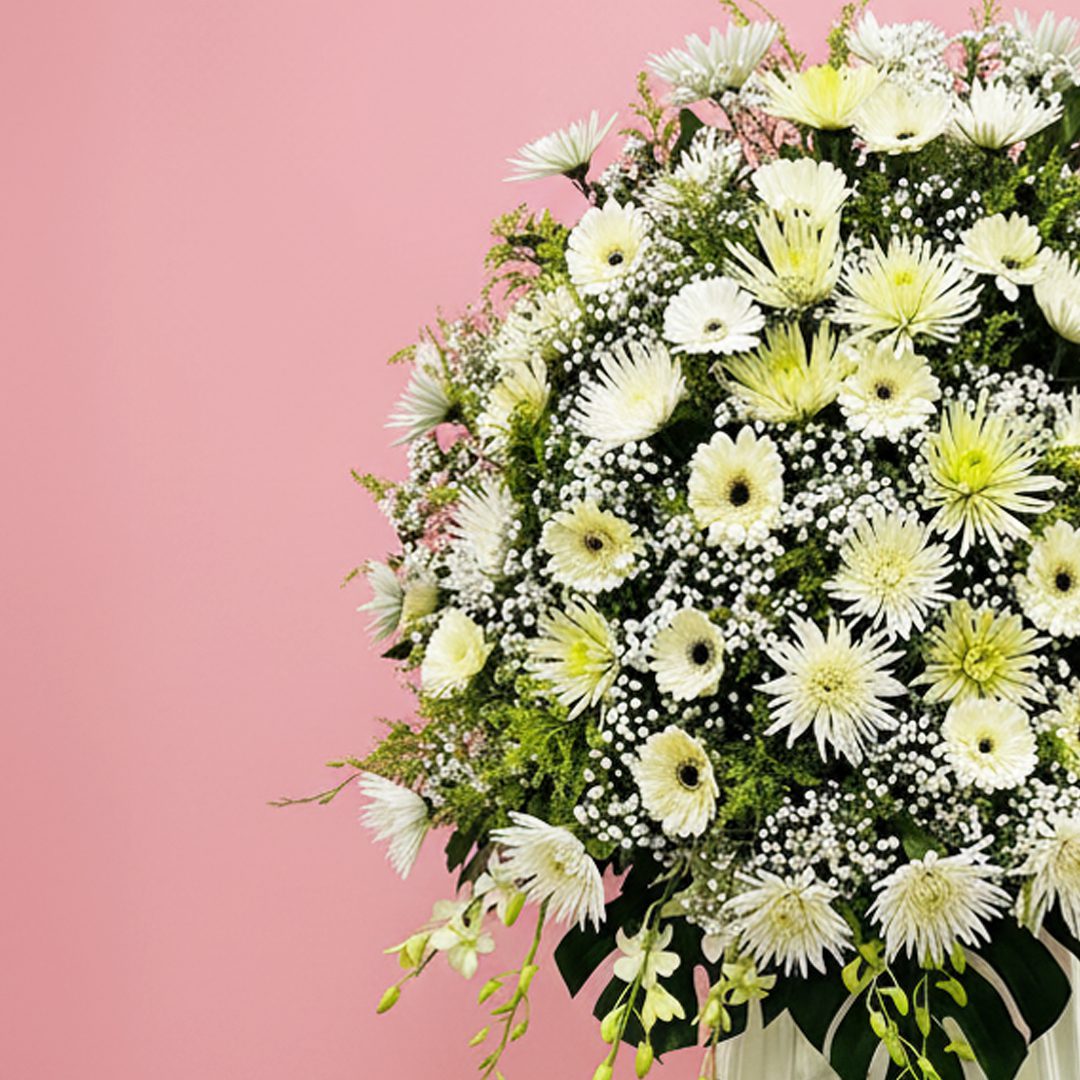

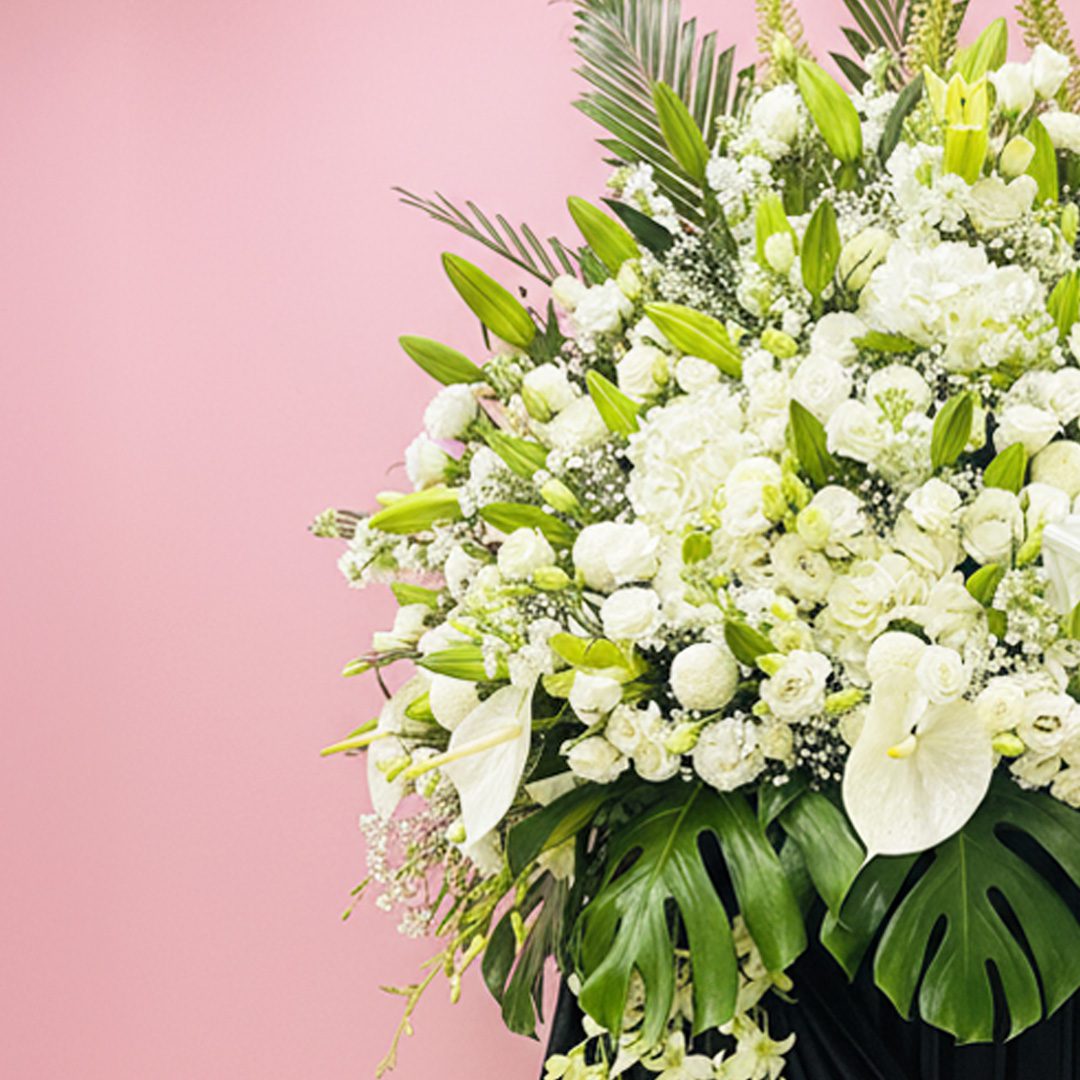
Quick Guide to Funeral Flower Arrangements
| Arrangement | Usually suitable for | Common placement |
|---|---|---|
| Condolence flower stand | Friends, colleagues and companies | Funeral hall, wake or memorial venue |
| Funeral wreath | Family, friends, associations and companies | Near the casket or front of the service |
| Casket spray | Immediate family or funeral organiser | Directly on the casket |
| Sympathy flower basket | Friends, neighbours and colleagues | Family home, office or memorial table |
| Condolence bouquet | Individuals offering personal support | Family home or tribute table |
| Special-shaped tribute | Close family or religious groups | Front of the service or beside the casket |
1. Condolence Flower Stands
Condolence flower stands are tall, freestanding arrangements commonly displayed at funeral halls, wakes, memorial venues, churches and temples. They offer a formal and visible expression of sympathy and are frequently chosen by friends, colleagues, companies and business associates.
A condolence message or company name can normally be included on a card or ribbon. Before ordering, confirm the delivery venue, service time and available display space. Roses, lilies, chrysanthemums, orchids, and gerberas in white, cream, pastel pink, yellow, or purple create a respectful tribute and convey sympathy.
Best for: Funeral halls, wake venues, memorial services and corporate condolences.

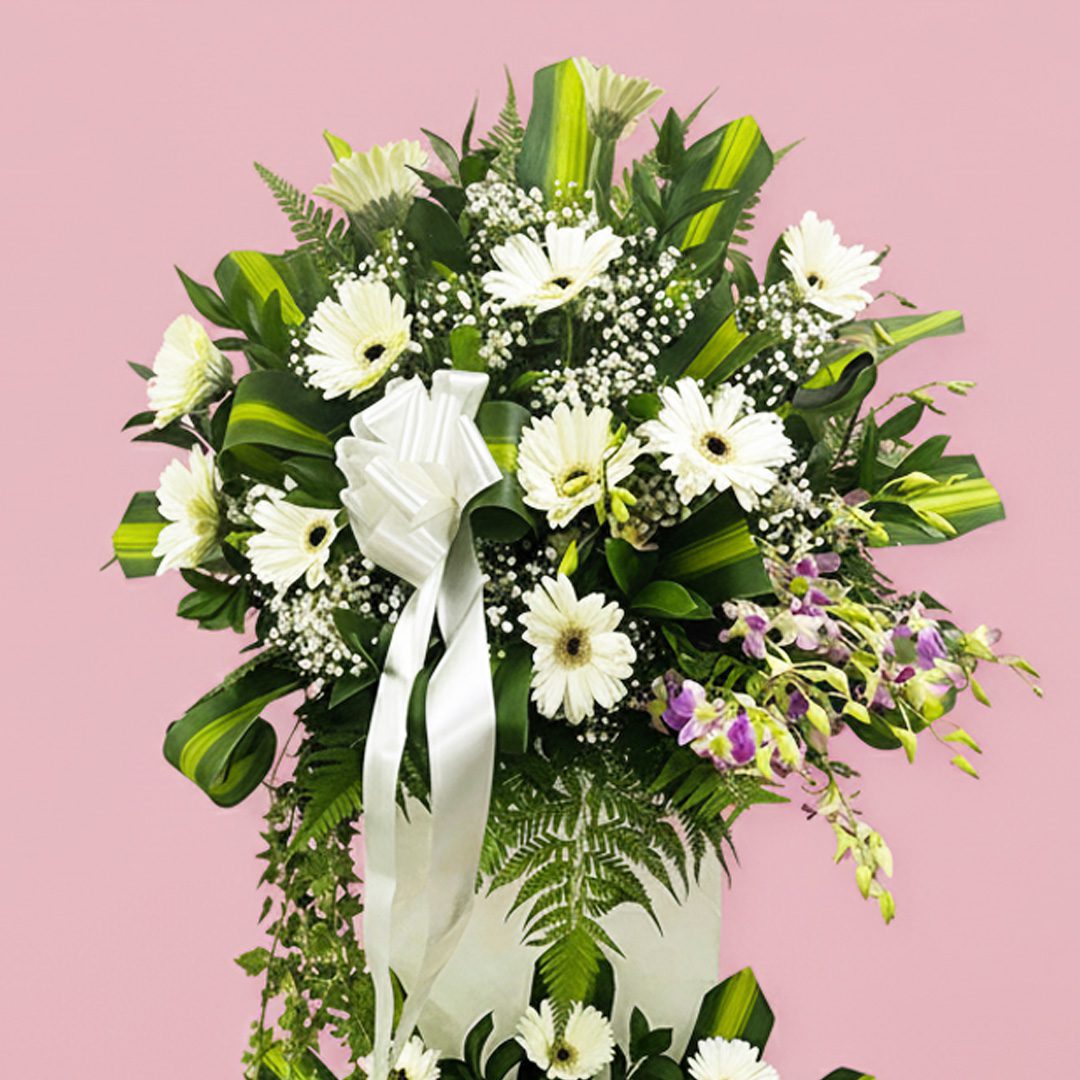

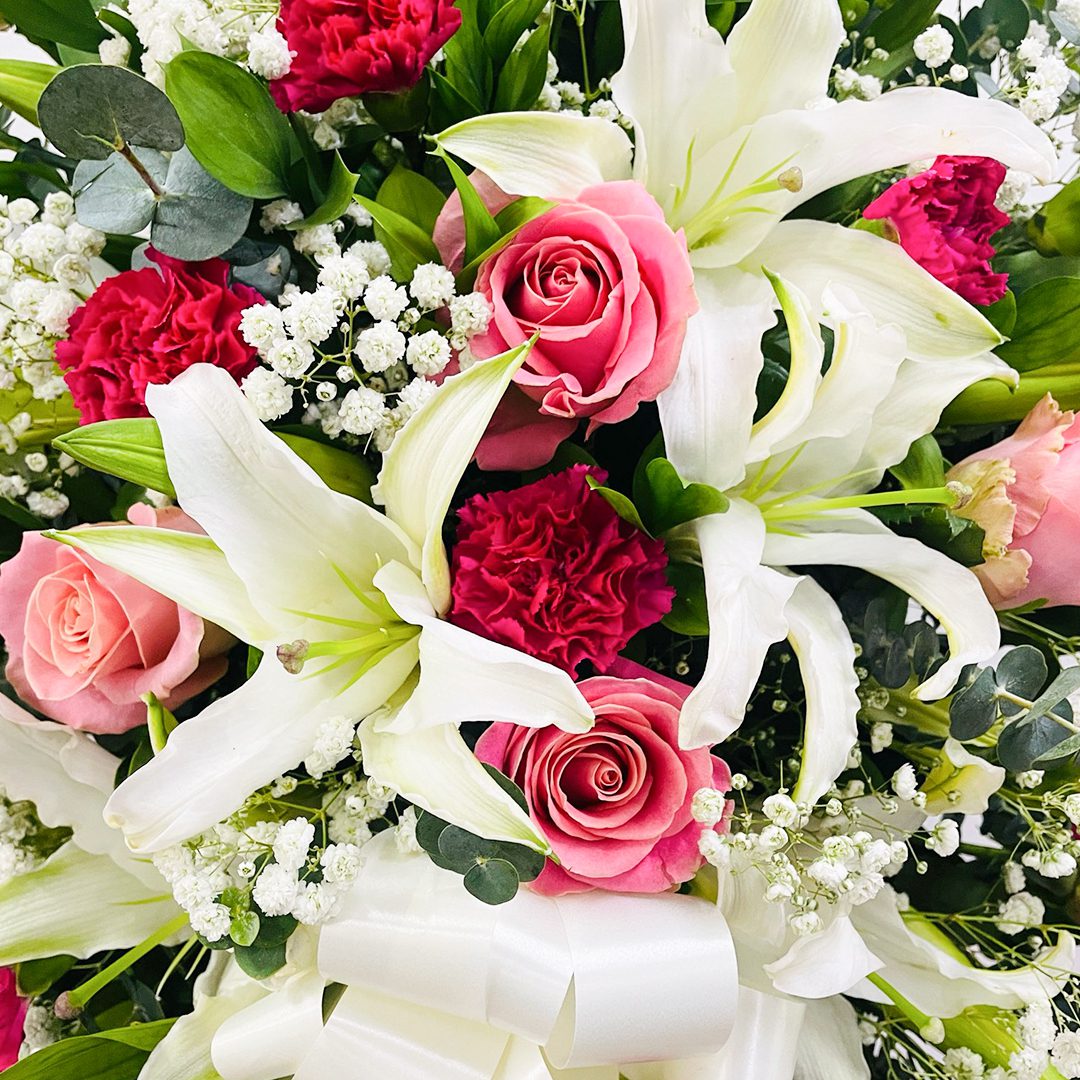
2. Funeral Wreaths / Standing wreaths
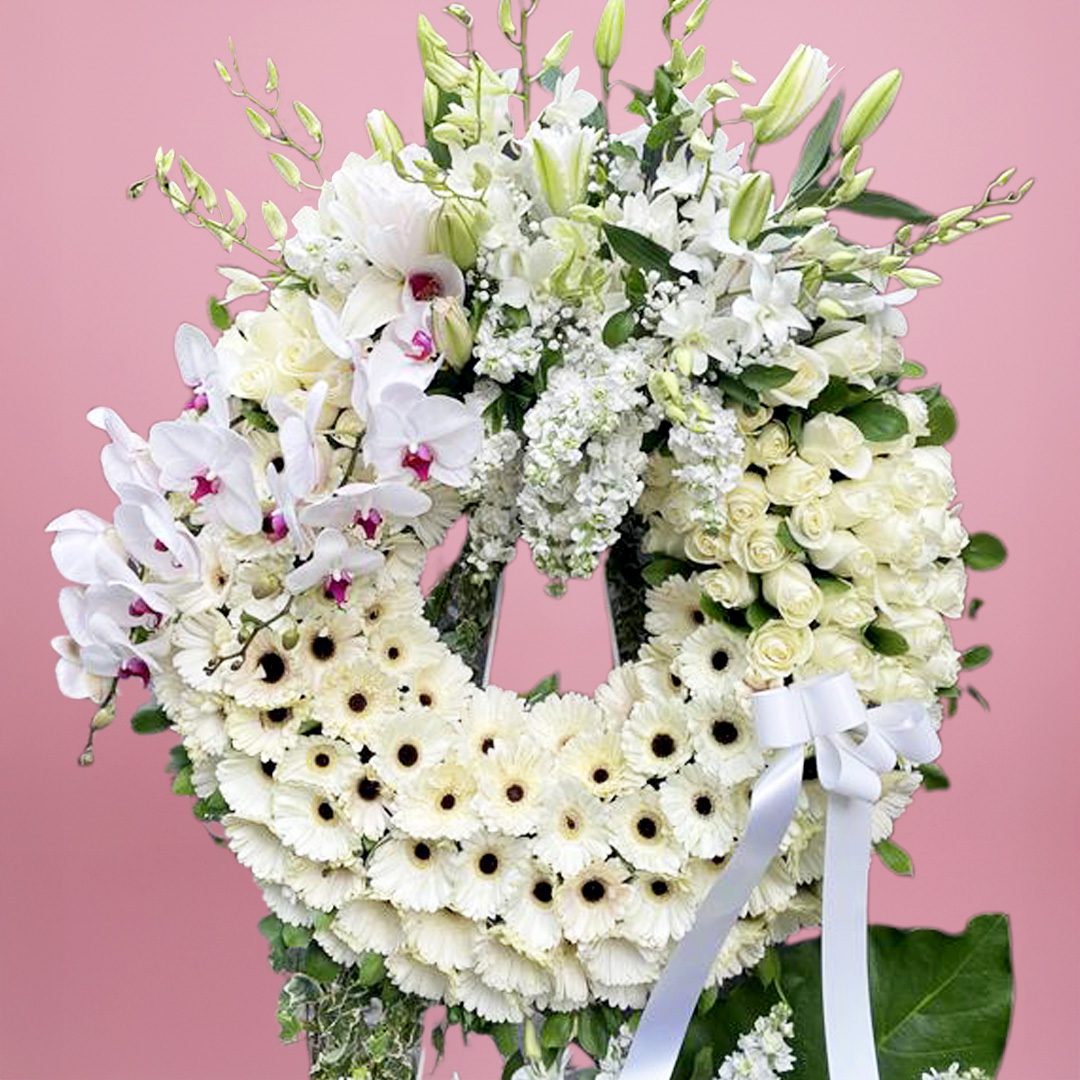
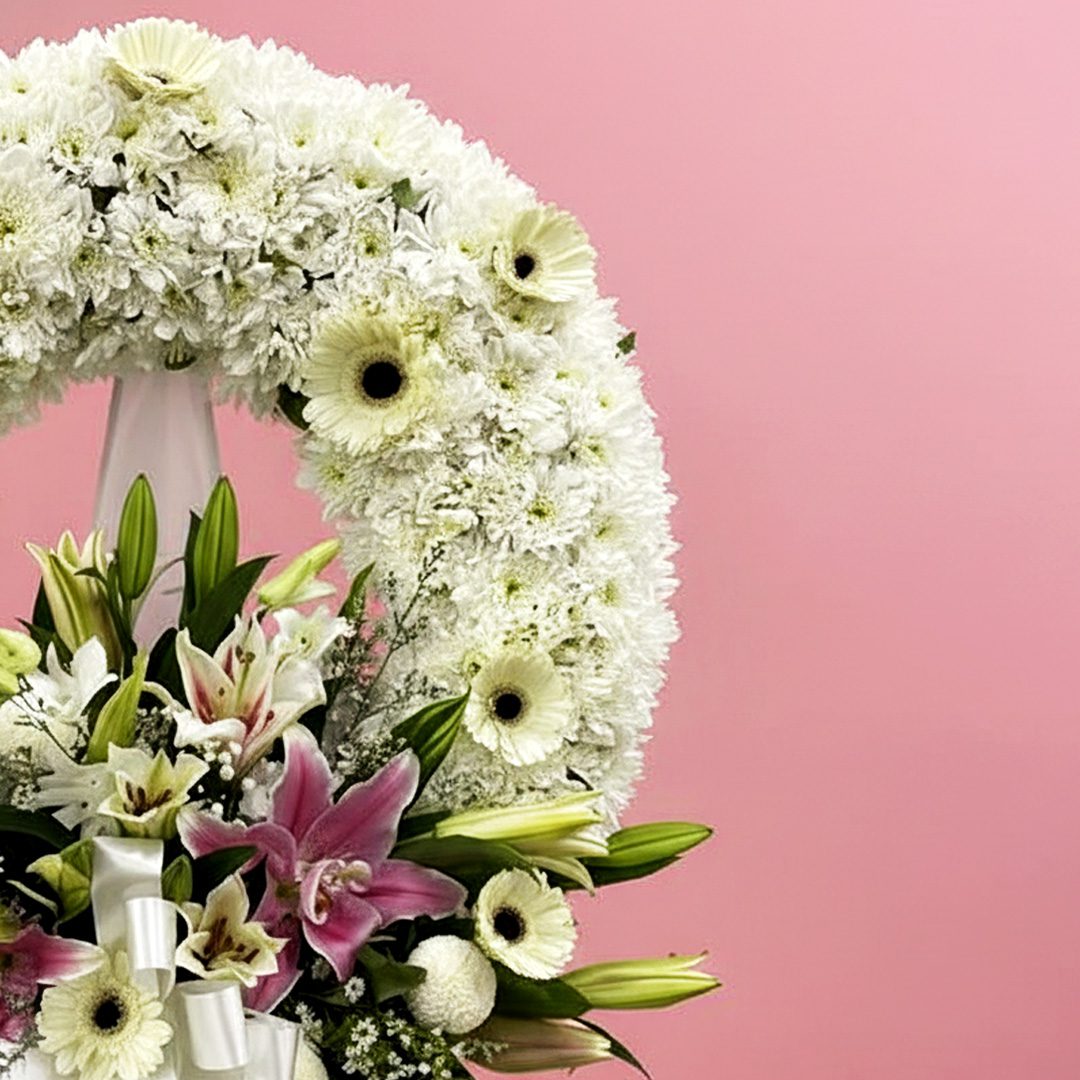
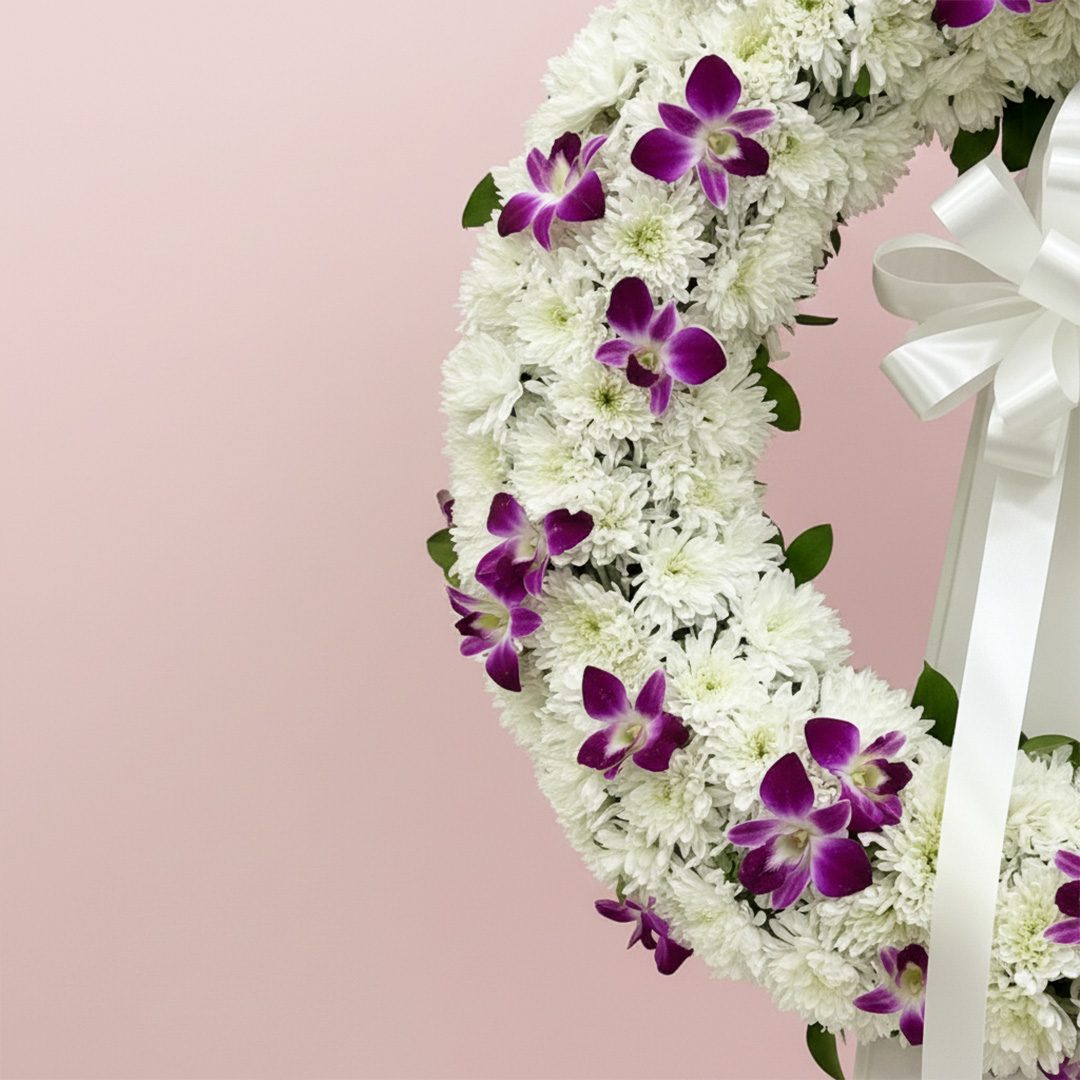
Wreaths are circular funeral flower tributes symbolizing remembrance and respect, usually palced near the casket or at memorial services. White, cream, and soft yellow are the most commonly used colors for flower wreath, but its is advaiseable to consider the family’s preferences too. Wreaths can be round, heart-shaped, or pillow-style and can be customized for various occasions,
- The choice of flowers can add symbolic meaning, making this gesture even more personal.
- Choose size based on the venue’s space—large halls need a larger ring.
- Roses, lilies, chrysanthemums, carnations, and orchids in white, cream, soft pink, yellow, or lavender are commonly chosen to express remembrance and respect.
When to use: For either a public memorial, church service, or when you want a framed tribute at the front of the venue.
Best for: Formal tributes from family members, friends, associations, or companies.




3. Casket Sprays/Casket Tributes
A casket spray is a large floral arrangement placed directly on top of the casket. Large floral arrangements on or near the casket express love and respect, often featuring the deceased’s favourite flowers and colours. These serve as the main tribute at the funeral.
Casket flowers commonly include roses, lilies,chrysanthemums, orchids, carnations, and hydrangeas in soft, respectful colours such as white, cream, pink, and lavender.
Best for: Immediate family members or those coordinating the funeral service.
When to use: If the funeral involves a coffin and you want a meaningful tribute from the immediate family or a close group of friends.
4. Sympathy Flower Baskets
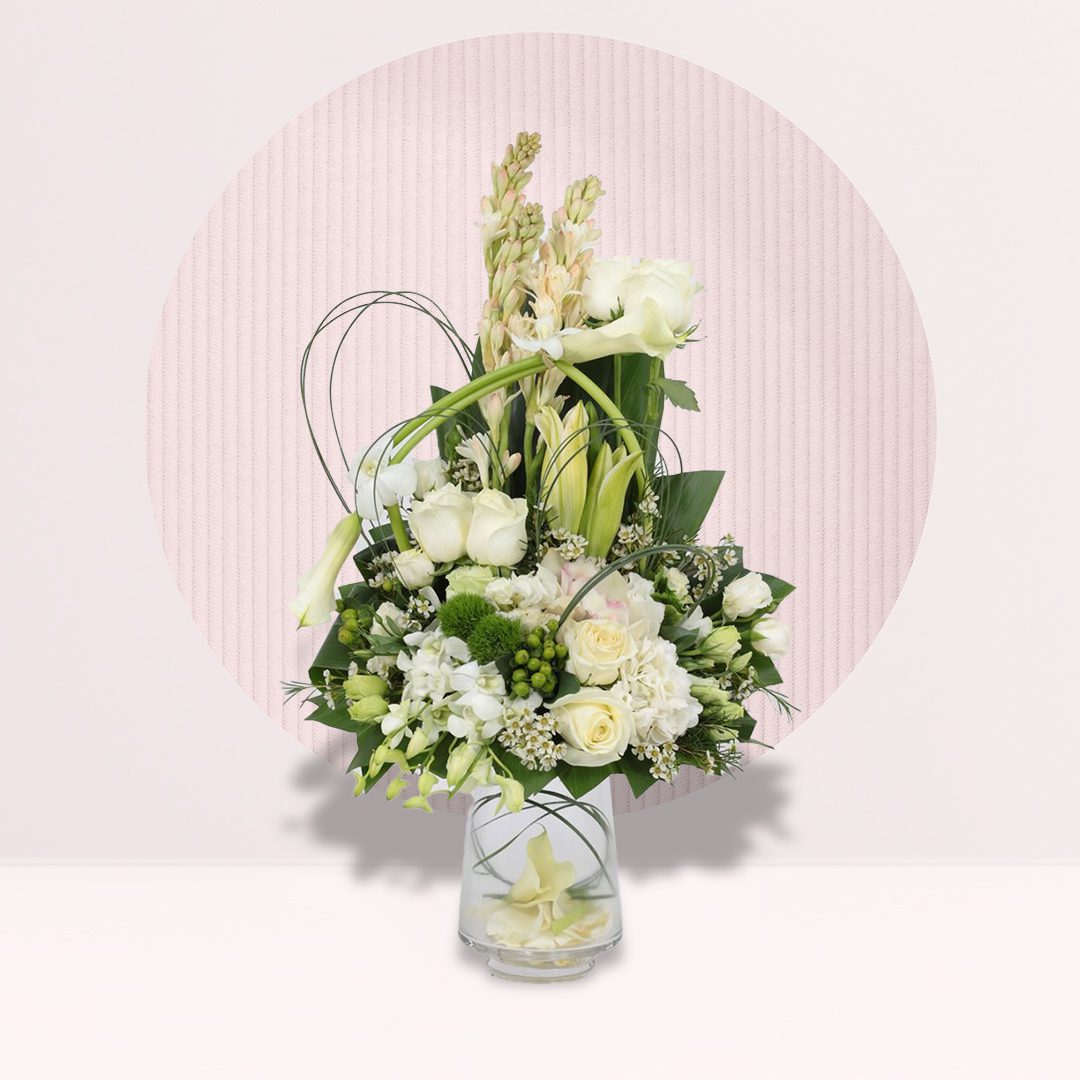
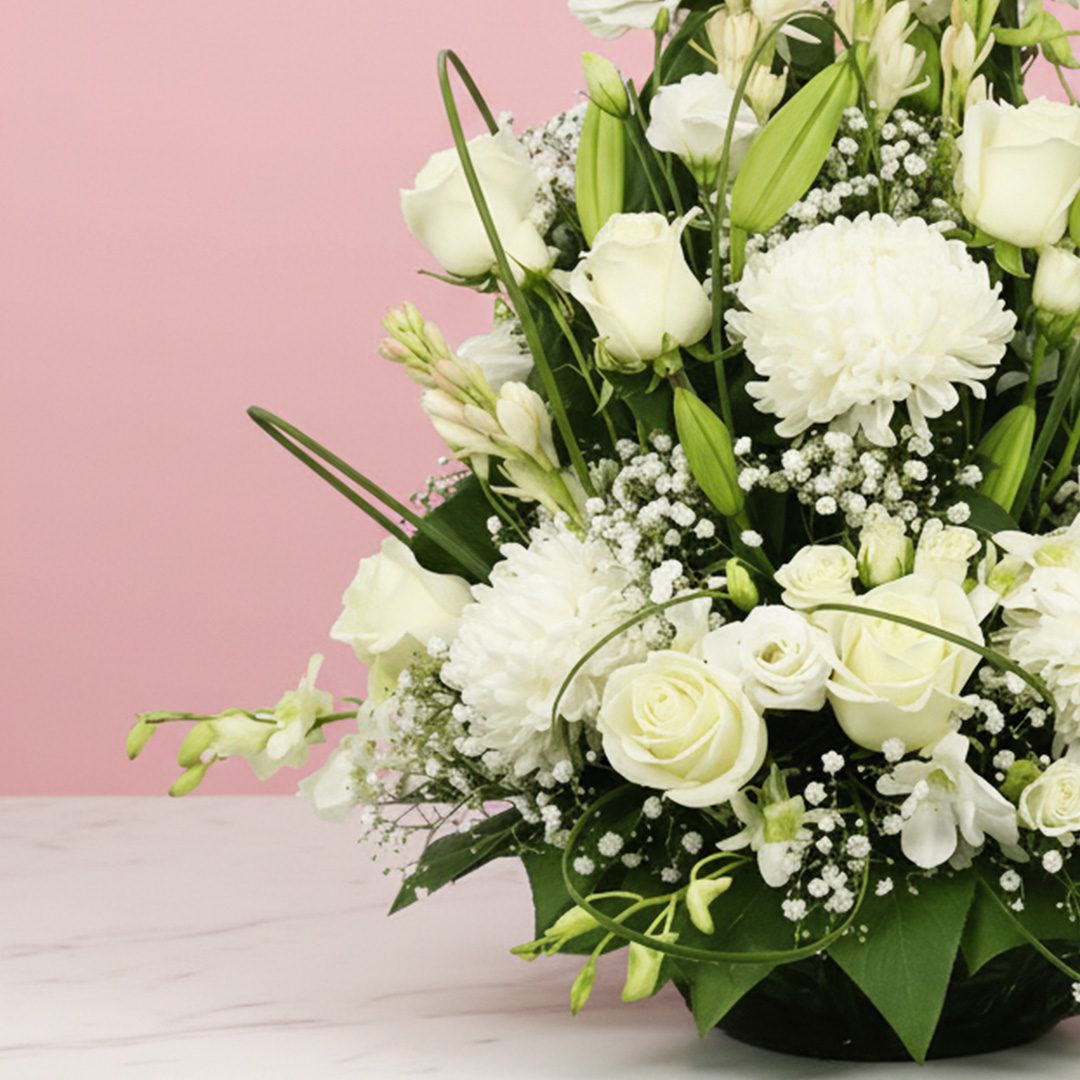
Sympathy flower baskets are self-contained arrangements designed for easy placement at a family home, office, funeral reception or memorial table. They are less formal than large stands or wreaths and can feel more personal when offering support to the bereaved family.
White lilies, roses, chrysanthemums, orchids, and other soft-toned flowers are commonly chosen for sympathy arrangements because they create a peaceful and respectful presentation. When selecting a basket, focus on simplicity and elegance rather than bright, celebratory colours.Select a basket with a stable base and a calm colour palette. A short condolence card should accompany the flowers.
Best for: Friends, neighbours, colleagues or anyone sending flowers directly to the family.

5. Condolence Bouquets / Hand-tied Arrangements/Posies
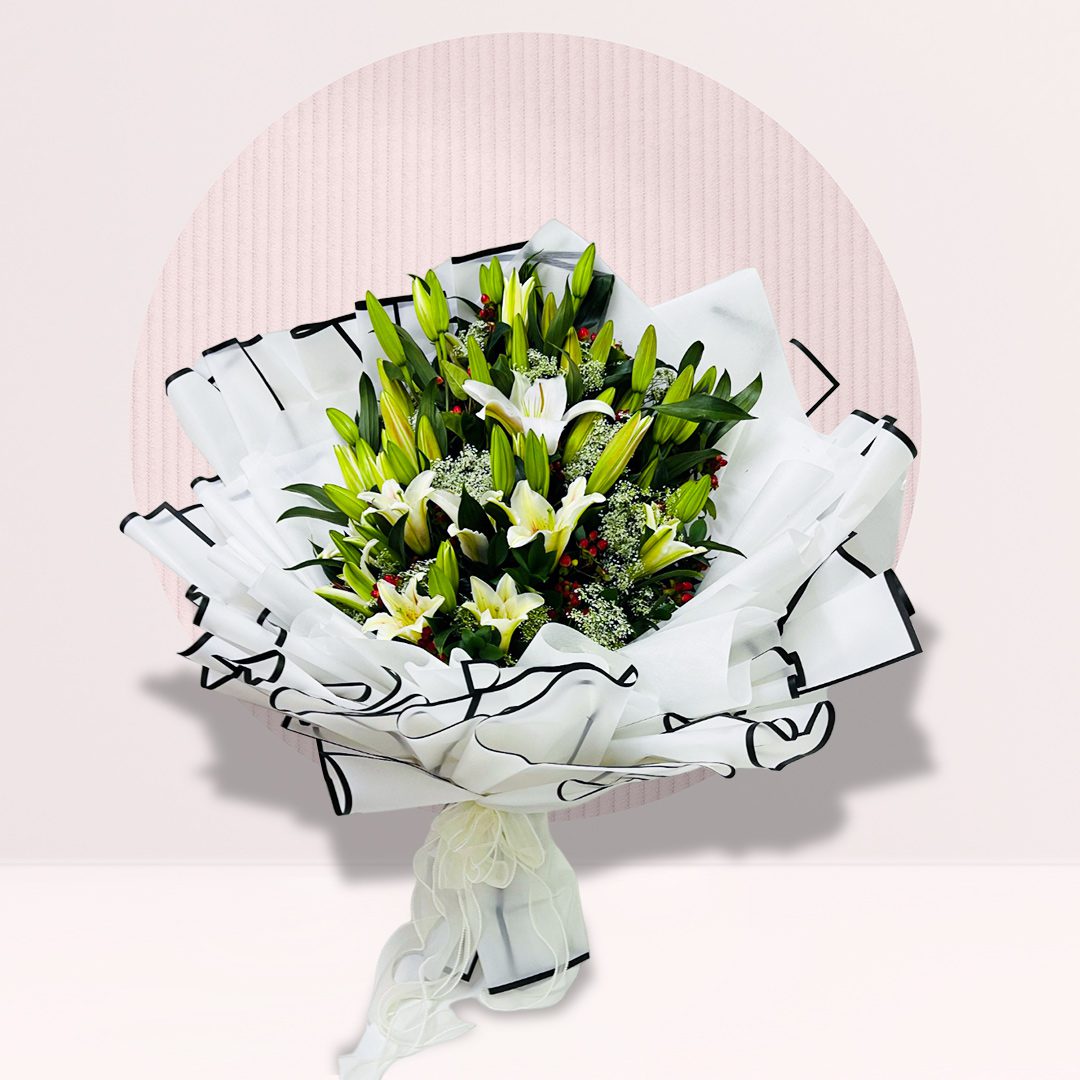
Condolence bouquets and posies are smaller floral tributes that are normally sent to the grieving family rather than used as the main funeral display. Hand-tied or vase-ready designs are suitable when you cannot attend the service, when sending support after the funeral or when you prefer a simple personal gesture.
Vase-ready arrangements can be more convenient for the recipient because they require less preparation.
Posies are ideal for placing at gravesites or gifting to family members, offering a heartfelt tribute without overwhelming the moment.
- Choose an easy-to-place style: vase-ready or hand-tied.
- For the family home or tribute table, consider subtle colours (white, cream, pale pastels) that won’t dominate the space.
When to use: When you want to send condolences but aren’t the immediate family, or for smaller, home memorial services.
5. Special Shapes (Hearts, Crosses, Letters)
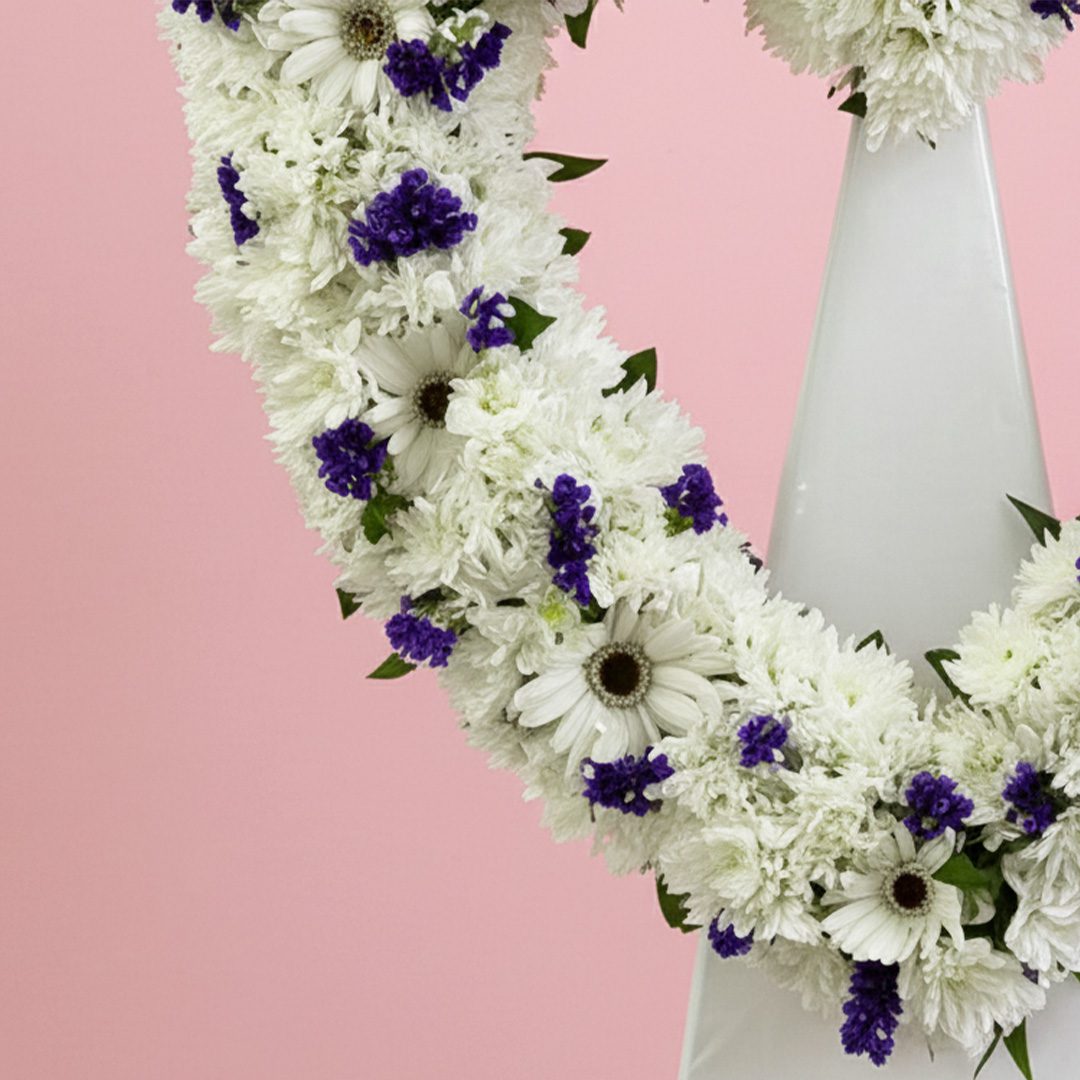
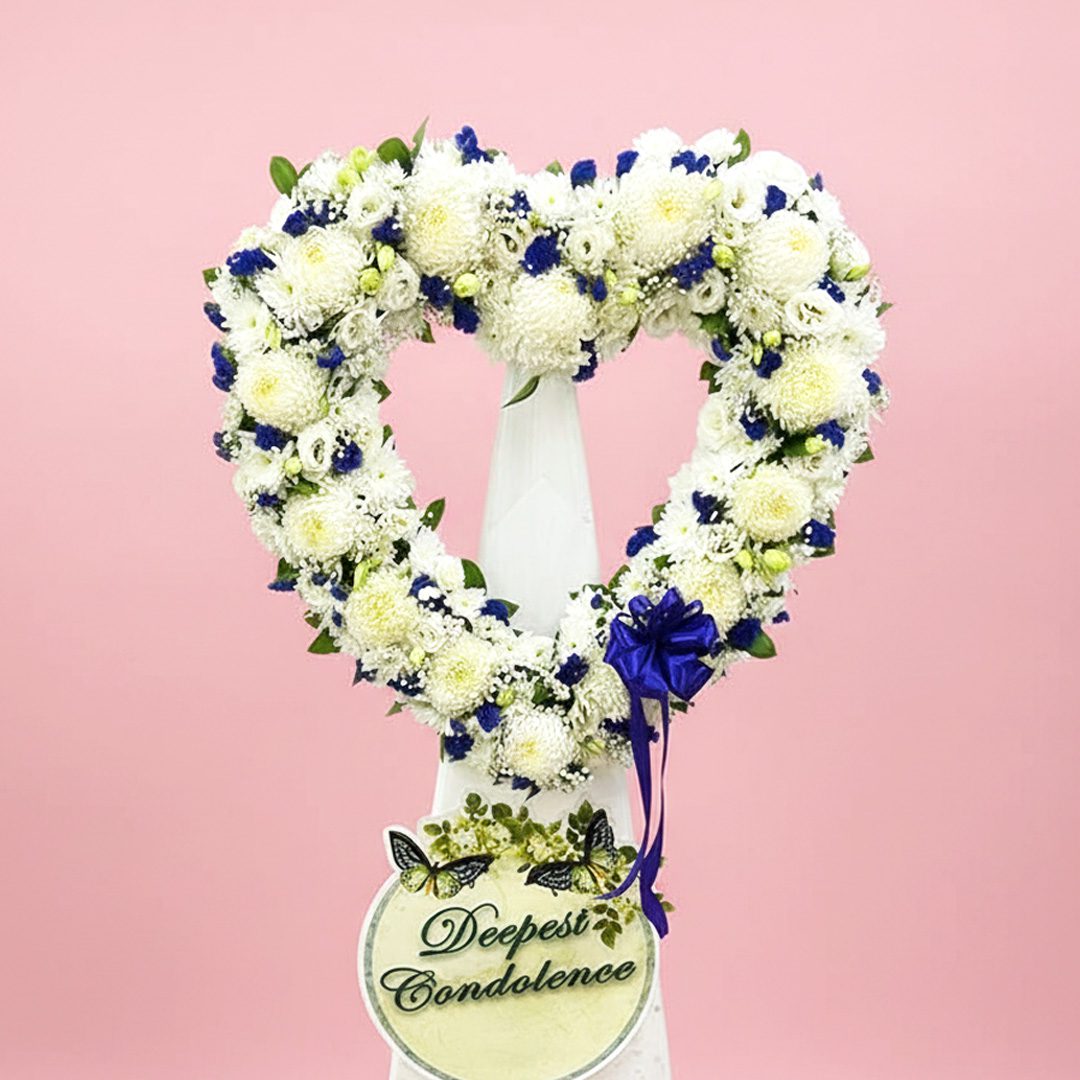
Special-shaped funeral tributes include floral hearts, crosses, letters, names and flower frames surrounding a photograph. These arrangements are highly personal and are normally selected by close family members or with the family’s approval.
Floral crosses may be suitable for Christian services, while hearts, names and photo tributes can represent a personal relationship or memory. Confirm the dimensions and display location with the funeral organiser before ordering.
Floral arrangements crafted into names or words, such as “Mum,” “Dad,” or “Nanna,” offer deeply personal and expressive tributes.
Cross Tributes – A meaningful choice for those of faith, cross-shaped arrangements combine flowers and foliage to create a spiritual tribute.
- Choose flowers and colours that reflect both tradition and personality.
- Decide on placement: such shapes draw eyes—ensure they don’t block views or overshadow other tributes.
When to use: For close family members or when you want to make a distinct, personal tribute.


6. Standing Sprays / Pedestals
- Ensure the arrangement height is appropriate and check with the funeral home.
- Choose a sturdy base (stand/pedestal) that fits the venue and won’t tilt.
- Colour selection: white or neutral tones often keep focus on the ceremony rather than the décor. White arrangements blend seamlessly with the funeral home’s décor.
When to use: For larger venues, podiums, or urn tables where height and visibility matter
Choosing the right funeral flower arrangement can be a straightforward process. You now have clear information on the types of arrangements, styles, and the difference between bouquets and tributes. This knowledge will enable you to make informed decisions without feeling stressed or uncertain.
How to Choose the Right Funeral Flower Arrangement?
Choose the arrangement according to where it will be delivered, who is sending it and how it will be displayed.
- For a funeral hall or wake: Choose a condolence flower stand or funeral wreath.
- For the family’s home: Choose a sympathy basket or condolence bouquet.
- For the main family tribute: A casket spray may be appropriate.
- For corporate condolences: A formal flower stand or wreath is usually easier to display.
- For a personalised tribute: Consider a floral heart, cross, name or photo frame with the family’s approval.
Customs can differ between families, religions and funeral venues. When uncertain, check with the family or funeral organiser before choosing the flowers, colours or arrangement style.
Frequently Asked Questions
What are the types of flower arrangements for a funeral?
Casket sprays, standing wreaths, bouquets, posies, sprays, sheaves, special shapes, and standing sprays or pedestals are some of the popular flower arrangements.
What are the best flowers for funeral arrangements?
Roses, lilies, carnations, chrysanthemums, orchids, and gladioli are standard.
What is a round flower bouquet for a funeral called?
Typically, “posy” or “round hand-tied bouquet”, sometimes just “round funeral bouquet”. The term may vary, but it usually refers to the dome-shaped style.
What are the commonly used popular funeral flower arrangements?
Wreaths and sprays are common in many traditions, with bouquets often sent to homes and casket sprays serving as main tributes. Many guides mention “wreaths,” “sprays and sheaves,” “posies and pillows,” and “casket tributes.”
A condolence flower stand or funeral wreath is generally suitable for a funeral hall or wake. A sympathy basket or bouquet is more appropriate for the family’s home, while casket sprays are normally arranged by immediate family members.
Who should order a casket spray?
Casket sprays are usually ordered by the immediate family or funeral organiser because they are placed directly on the casket and serve as the principal floral tribute.
What is the difference between a funeral wreath and a condolence flower stand?
A funeral wreath is usually circular or oval and displayed on an easel. A condolence flower stand is a taller freestanding arrangement designed for visibility at a funeral hall, wake or memorial venue.
Are funeral flowers appropriate for every religion?
Funeral customs differ between religions and families. Check with the family or funeral organiser before sending flowers when you are uncertain about the appropriate arrangement, flower colour or delivery timing.


