
Different Types of Wedding Bouquets in Malaysia: Shapes, Styles & Trends
Wedding hand bouquets come in different shapes, sizes and construction styles, including round, cascade, hand-tied, posy, garden-style and asymmetrical designs. The right wedding bouquet should complement the bride’s dress, height, venue, colour palette and preferred level of formality.
In Malaysia, couples should also consider humidity, flower availability and how long the bouquet will remain out of water. This guide compares 12 wedding bouquet styles and explains which dresses, venues and wedding themes each one suits best.


Wedding Bouquet Shapes at a Glance
| Bouquet style | Shape and size | Best suited for | Buyer consideration |
|---|---|---|---|
| Round | Symmetrical and dome-shaped | Formal and classic weddings | Easy to carry and photograph |
| Posy | Small and compact | Minimalist brides and bridesmaids | Comfortable for long ceremonies |
| Nosegay | Small, structured and detailed | Traditional or intimate weddings | Similar to a posy but usually more structured |
| Hand-tied | Relaxed with visible stems | Rustic, garden and outdoor weddings | Easy to customise |
| Cascade | Flowers trail downwards | Formal and dramatic bridal looks | Heavier and normally more expensive |
| Asymmetrical | Uneven with natural movement | Modern and editorial weddings | Needs careful balancing |
| Crescent | Curved like a half-moon | Romantic and garden weddings | Works well with trailing foliage |
| Garden/free-form | Loose, airy and textured | Boho and outdoor weddings | May be wider and less structured |
| Presentation/pageant | Long stems carried across the arm | Modern and elegant ceremonies | Requires a different holding position |
| Pomander | Floral ball with a ribbon | Flower girls and themed weddings | Requires flowers around the entire shape |
| Biedermeier | Concentric rings of flowers | Structured and artistic weddings | More detailed florist work |
| Composite | Petals arranged as one large flower | Luxury and editorial weddings | Labour-intensive and delicate |
| Hoop | Flowers arranged around a circular frame | Contemporary and bohemian weddings | Lightweight but less traditional |

What Are the Different Types of Wedding Bouquets?
Wedding bouquets are generally distinguished by their shape, size and construction. Structured styles include round, nosegay, Biedermeier and composite bouquets, while hand-tied, garden-style and asymmetrical bouquets have a looser appearance. Cascade bouquets create downward movement, while pageant bouquets are carried lengthwise across the arm.
In Malaysia, wedding bouquets have evolved far beyond simple arrangements. Today’s brides (and even grooms!) are embracing modern wedding bouquet styles — from soft, round clusters of roses that symbolize eternal love, to bold, cascading orchids that scream luxury and passion.
But with so many different types of wedding bouquets out there — how do you choose one that fits your style, your dress, and your story?
Malaysian wedding floristry features various bouquet types: round, cascade, hand-tied, posy/nosegay, Biedermeier, pomander, composite, and garden/free-form. Each type offers distinct shapes and styles, so choose one that aligns with your dress, theme, and personality. So when you’re choosing your wedding bouquet for bride and groom, you’ll want to match your dress, theme and personalities.


Why Wedding Bouquet Shapes & Styles Matter?
In Malaysia’s wedding industry, the bouquet is more than a prop — it’s a design statement. Whether your venue is a hotel ballroom in Kuala Lumpur or a beach in Penang, the bouquet’s shape, scale, flower types and style all play into how it photographs, how comfortable you feel holding it, and how it complements both bride and groom’s look.
Different Types of Bouquet Arrangements: The Key Styles

1. Round (Classic) Bouquet
A round wedding bouquet is a compact, symmetrical arrangement with flowers placed evenly to form a dome shape. It is one of the most recognisable structured bouquet styles and usually has little trailing greenery.Choose heat-tolerant flowers like roses or orchids and add a strong ribbon wrap for humidity.
Shape & style: Dome-shaped and compact, with tightly arranged flowers forming a ball-like top. Couples love it for its timeless look, ease of carrying, and stunning appearance in photos.
Ideal for: Elegant traditional weddings, as it goes well with structured gowns and formal settings.
Recommended Flowers: Roses, peonies, hydrangeas, carnations, lisianthus, chrysanthemums and orchids.
Advantages: Easy to carry, photographs well from every angle and creates a refined, elegant bridal look.
Consider Before Choosing: A tightly packed round bouquet may feel heavy if large flowers or too many stems are used. The size should match the bride’s height, dress details and overall wedding style.
Tip: Use a single flower type in varying shades or mix blooms with subtle contrasts. Short stems give a formal look, while longer ones create a softer, contemporary feel.
-


50 Red Roses Grand Flower Box
RM550.00 – RM750.00Price range: RM550.00 through RM750.00


2. Cascade Wedding Bouquet
A Cascade Bouquet, also known as a teardrop bouquet, is an elegant arrangement that flows downward, resembling a natural cascade of blooms and foliage. A cascade wedding bouquet has a rounded top with flowers and greenery flowing downwards like a waterfall. The trailing shape creates movement and visually lengthens the bride’s silhouette.
Shape & style: The bouquet features a rounded top that tapers into a cascading trail of flowers and greenery, creating movement and dimension. It often combines structured blooms like roses, orchids, and peonies with trailing elements like ivy or ferns.
Recommended Flowers: Phalaenopsis or dendrobium orchids, roses, calla lilies, peonies, lisianthus, ivy, ferns and trailing eucalyptus.
Advantages: Creates a luxurious statement, photographs beautifully and complements long or fitted wedding dresses.
Consider Before Choosing: Cascade bouquets can be heavier, more delicate and costlier than compact styles. The length should also suit the bride’s height, dress design and comfort.
Ideal for: Glamorous ceremonies, long train gowns, photo shoots that emphasise movement.
Tip: Incorporate tropical greenery (ferns, orchids) for a local touch
3. Hand-Tied Bouquet
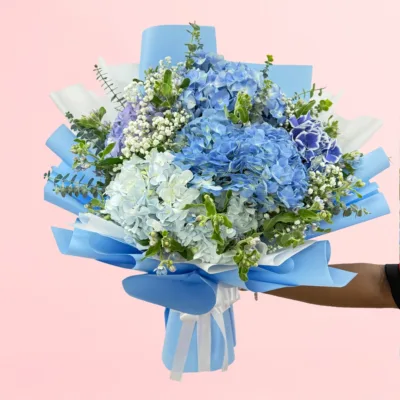
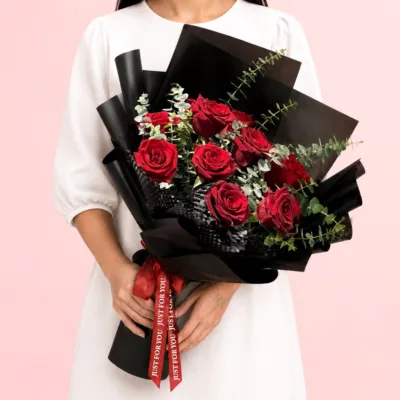
A hand-tied bouquet is made by arranging flowers and greenery in the hand and securing them with ribbon, lace, or twine, resulting in a relaxed, freshly gathered look.
Shape & style: Loose, rounded, or slightly cascading shape, depending on the flower selection and theme.
Ideal for: Outdoor weddings, boho/chic themes, brides who want a relaxed vibe.
Recommended flowers:Roses, orchids, lisianthus, hydrangeas, carnations and eucalyptus.
Advantages: Comfortable, customisable and available in small or large sizes.
Consider before choosing: Loosely arranged flowers may require additional support during hot or humid outdoor ceremonies.
Tip: Adding foliage like eucalyptus or palm fronds to give movement and visual interest



4. Posy Wedding Bouquet
A Posy or Nosegay Bouquet is a classic and elegant choice, loved for its simplicity and versatility. Small and round, it’s popular for brides, bridesmaids, and formal events.
Shape & style: This bouquet features a compact, dome shape with tightly arranged blooms and soft greenery. Typically tied with a satin or lace ribbon, it’s easy to hold in one hand. Common flowers include roses, peonies, tulips, and ranunculus, based on the wedding theme and season.
Ideal for: Minimalist brides, engagements, bridesmaids’ bouquets
Recommended Flowers: Roses, peonies, tulips, lisianthus, carnations, hydrangeas and small orchids.
Advantages: Lightweight, easy to carry, budget-friendly and suitable for both brides and bridesmaids.
Consider Before Choosing: Its smaller size may not create enough visual impact with heavily detailed gowns or large ballroom settings. Choose flower sizes that maintain a balanced shape.
Florist Tip: For weddings in Malaysia, select durable blooms such as roses, carnations or orchids and keep the stems securely wrapped to maintain freshness and shape.
5. Nosegay Wedding Bouquet
A nosegay wedding bouquet is a small, structured arrangement of flowers and greenery, traditionally finished with ribbon or decorative wrapping. It resembles a posy bouquet but usually has a more defined shape and visible foliage.
Shape & Style: A compact, rounded arrangement with evenly placed blooms, greenery and neatly wrapped stems.
Ideal For: Traditional weddings, church ceremonies, vintage themes, intimate celebrations and bridesmaids.
Recommended Flowers: Roses, carnations, lisianthus, baby’s breath, lavender, chrysanthemums, eucalyptus and herbs.
Advantages: Easy to carry, structured, versatile and suitable for adding meaningful flowers, herbs or foliage.
Consider Before Choosing: A nosegay can look too small beside an elaborate gown. Strongly scented flowers or herbs should also be chosen carefully for brides sensitive to fragrance.
Florist Tip: Use a balanced mix of hardy flowers and fresh greenery to preserve the bouquet’s structured shape throughout Malaysia’s warm and humid wedding conditions.
6. Biedermeier Bouquet
A Biedermeier Bouquet is a 19th-century floral arrangement from Germany and Austria, characterized by its structured design with concentric circles of contrasting flowers, perfect for sophisticated brides.
Shape & Style: This round, compact bouquet features colorful flowers, such as roses, tulips, and dahlias, arranged in concentric rings, finished with neatly wrapped satin ribbon or lace.
Ideal for: Creative couples who love graphic design, modern wedding bouquet styles.
Why it’s unique: Combines precision and artistry; extra visual “wow” factor.
Recommended Flowers: Roses, carnations, chrysanthemums, lisianthus, hydrangeas, gerberas and small orchids.
Advantages: Creates a unique visual pattern, photographs beautifully and allows wedding colours to be incorporated in a structured design.
Consider Before Choosing: The detailed arrangement requires skilled florist work and may cost more than a simple round bouquet. Too many colours or flower varieties can make the design appear busy.
Tip: Choose ring colours that match your wedding palette—for example, blush outer ring, white mid ring, accent colour inner core.
7. Pomander Bouquet
A Pomander Bouquet, or kissing ball, is a round arrangement of flowers typically carried by flower girls or bridesmaids. Suspended by a ribbon or held by a loop, it adds a whimsical and elegant touch to ceremonies.
Shape and Style: spherical floral arrangement created by tightly clustering blooms into a ball shape, often decorated with satin ribbons, pearls, or lace. Common flowers used include roses, carnations, chrysanthemums, and orchids.
Ideal for : Bridesmaids, flower girls, or adding a touch of whimsy to your wedding.
Recommended Flowers: Roses, carnations, chrysanthemums, hydrangeas, gerberas, orchids and baby’s breath.
Advantages: Easy to carry, visually distinctive, photographs well and keeps the flowers arranged in a neat, uniform shape.
Consider Before Choosing: Pomander bouquets may feel heavy when made with large or water-filled blooms. They also require flowers on all sides, which can increase the number of stems and overall cost.
Why it works: Charming, playful, and distinct from the traditional handheld bouquet.
Tip: Use durable flowers like carnations or chrysanthemums that can withstand tropical conditions.

8. Composite Bouquet
A Composite Bouquet is a beautiful floral arrangement that resembles a single large flower, created by carefully combining many individual petals or smaller flowers.
Shape and Style: A round or single-flower shape, resembling a giant rose, camellia, or lotus.
Ideal For: Luxury weddings, elegant indoor ceremonies, minimalist bridal looks and brides seeking a unique statement bouquet.
Recommended Flowers: Roses, lilies, orchids, gladiolus and camellia-style blooms with strong, well-shaped petals.
Advantages: Creates a luxurious focal point, looks elegant in photographs and offers a distinctive alternative to traditional flower arrangements.
Consider Before Choosing: Composite bouquets require detailed florist work, making them more delicate and expensive. They should be handled carefully and kept away from heat for long periods.
Florist Tip: For weddings in Malaysia, choose durable petals such as roses or orchids and keep the bouquet in a cool environment until the ceremony to maintain its shape and freshness.
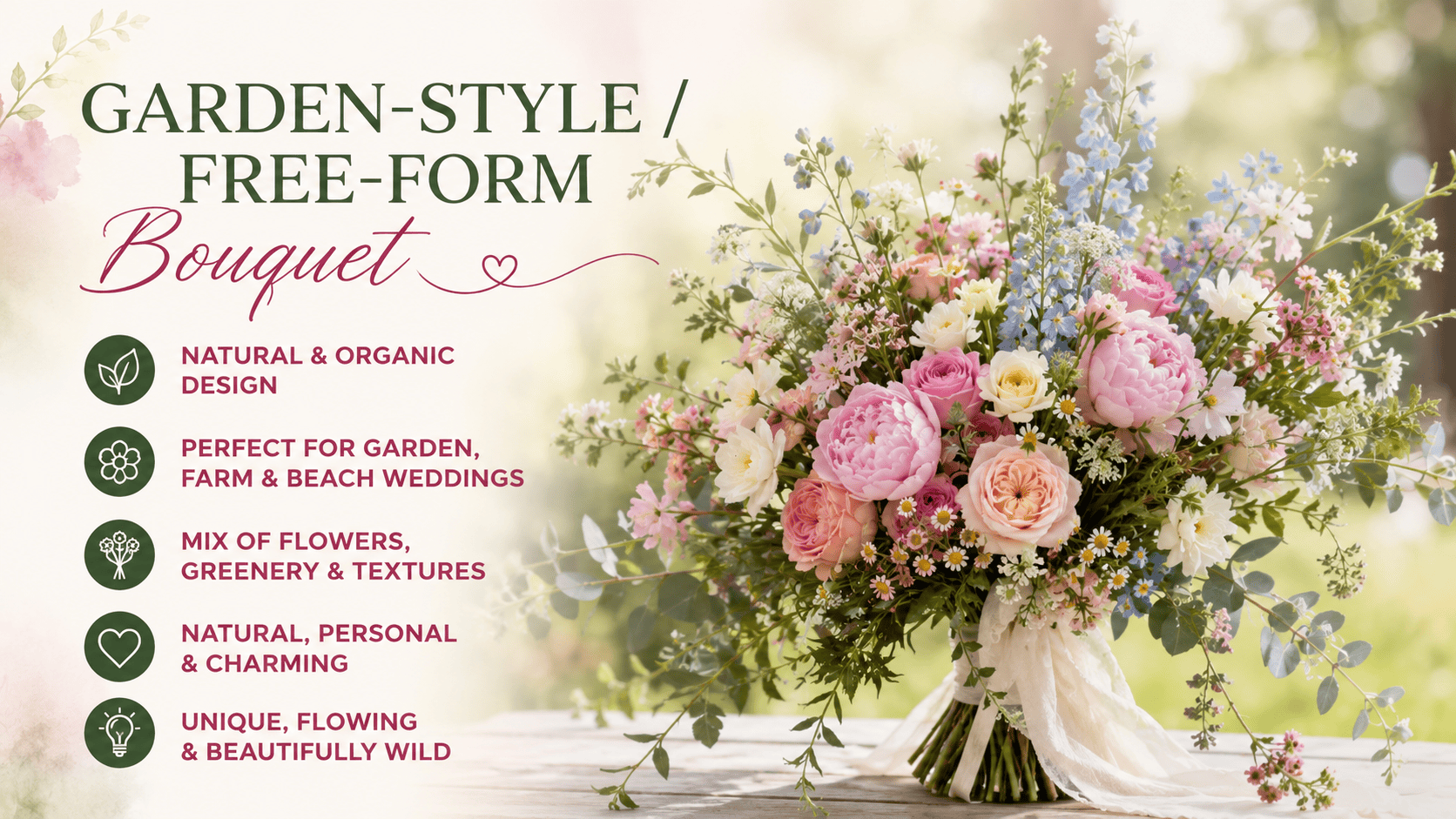
9. Garden-Style / Free-Form Bouquet
A Garden-Style or Free-Form Bouquet captures the beauty of nature. Its design is loose, airy, and has an organic look as if the flowers were picked straight from a blooming garden.
Shape & Style: This bouquet has a “just-picked” feel, showcasing wildflowers, soft greenery, and cascading vines in a flowing arrangement. The mix of flower sizes, shapes, and textures adds charm, perfect for a romantic, garden-inspired look.
Ideal For A garden-style bouquet suits natural settings like gardens, farms, and beaches.
Recommended Flowers: Roses, peonies, hydrangeas, lisianthus, orchids, delphiniums, tulips, wax flowers, eucalyptus and seasonal foliage.
Advantages: Creates a natural and personalised look, adds beautiful texture and can combine several flower varieties and colours.
Consider Before Choosing: Large garden-style bouquets can feel wide or heavy and may hide details on the wedding dress. Delicate seasonal flowers may also require extra care in warm weather.
Florist Tip:
For weddings in Malaysia, combine delicate-looking flowers with durable roses, orchids and tropical foliage to maintain the bouquet’s fresh, natural shape in humid conditions. When choosing flowers for a garden-style bouquet, opt for heat-tolerant blooms like sunflowers, lisianthus, orchids, or tropical natives.
Structured vs Unstructured Wedding Bouquets
| Structured bouquet | Unstructured bouquet |
|---|---|
| Clean, controlled shape | Loose and naturally flowing |
| Usually symmetrical | Often asymmetrical |
| Minimal trailing greenery | More visible foliage and movement |
| Round, nosegay, Biedermeier and composite | Garden-style, boho, hand-tied and oversized |
| Suits formal and traditional weddings | Suits garden, beach and relaxed weddings |
A cascade bouquet combines both qualities as it is carefully constructed but has a flowing, elongated appearance.
Best Flowers for Wedding Bouquets in Malaysia
When you’re picking a bouquet, what flowers you choose is just as crucial as how the bouquet is arranged. Here are popular and smart flower choices in Malaysia:
Flowers for Structured Bouquets
- Roses
- Tulips
- Calla lilies
- Orchids
- Carnations
Flowers for Garden and Hand-Tied Bouquets
- Lisianthus
- Spray roses
- Hydrangeas
- Baby’s breath
- Seasonal greenery
Premium or Seasonal Flowers
- Peonies
- Ranunculus
- Imported garden roses
- Delphiniums
For Malaysian weddings, consider mixing one premium flower (e.g., imported roses or peonies) with one local/tropical flower (e.g., orchids or palm fronds) — this combination provides both a luxurious feel and climate-appropriate durability.
Seasonal availability, flower condition and transportation time should be considered before confirming a bridal bouquet. Imported or delicate flowers may require advance ordering and careful temperature control, so ask your florist about suitable alternatives when a particular bloom is unavailable.

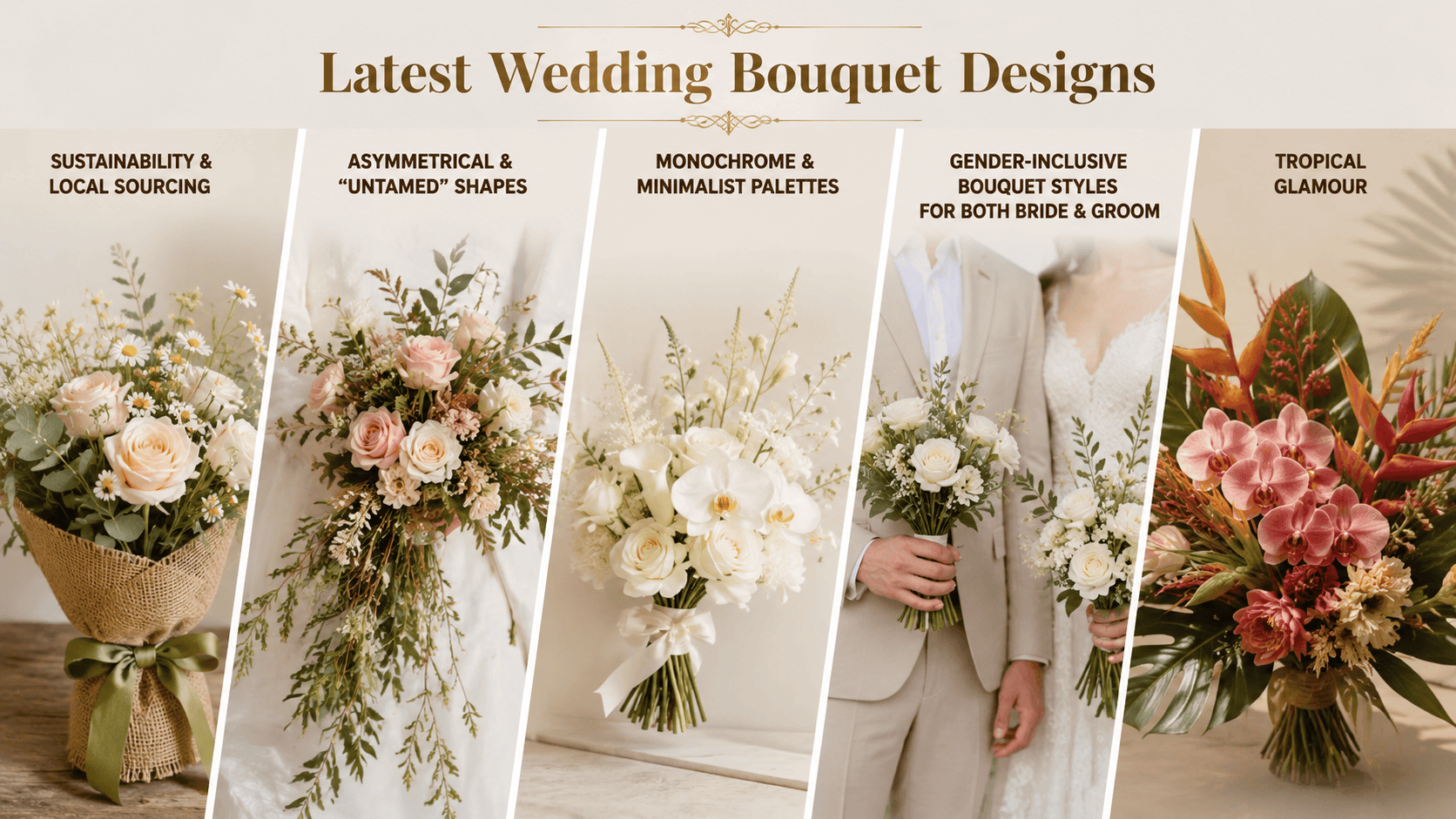
Current Wedding Bouquet Trends in Malaysia
- Sustainability & Local Sourcing
Eco-friendly bouquets are gaining popularity because people prefer locally grown flowers, reusable ribbons, and biodegradable wraps.
- Sculptural and Asymmetrical Shapes
Symmetry was once favored in designs, but now uneven and flowing shapes are trendy. Branches or trailing greenery that extend sideways or diagonally create a modern aesthetic.
- Monochrome & Minimalist color Palettes
Single-colour bouquets, whether in all-white, delicate blush, or rich, deep burgundy, create striking impressions with their simplicity.
- Gender-Inclusive Bouquet Styles for Both Bride & Groom
Wedding bouquet designs are no longer just for the bride. Many couples coordinate matching or complementary bouquets (or smaller versions) for the grooms, too.
- Tropical Flowers and Foliage
In Malaysia, florists are incorporating local flora like orchids, heliconia, or banana-leaf accents to elevate classic styles for a tropical twist.
- Natural Hand-Tied Designs
Visible stems, soft ribbons and loosely gathered flowers create a relaxed alternative to highly structured bouquets.
How to Choose a Wedding Bouquet for Your Dress
|
Venue /dress |
Bouquet shape |
Why it works |
|
Full skirt, ball gown in a ballroom |
Round or Cascade |
Balances a big dress and a grand venue |
|
Sleek mermaid or fitted dress |
Hand-tied or asymmetrical |
Keeps proportions clean and elegant |
|
Garden/outdoor wedding with A-line dress |
Garden-style or Posy |
Natural and outdoor friendly |
|
Groom’s outfit or couple shots |
Smaller coordinated bouquet pairs |
Creates cohesion and visual balance |
How to Choose the Right Bridal Bouquet Shape
A great bridal bouquet involves more than just picking pretty flowers. you should consider your wedding dress, venue, and comfort before choosing your birdal bouquets to make the looks balanced and photographs.
1. Match the Bouquet to Your Wedding Dress
The bridal bouquet should complement the dress rather than compete with it.
- Ball gown: Full round, cascade, or larger asymmetrical bouquets can balance the volume of the skirt.
- A-line dress: If you want a a versatile and timeless look, go for round, hand-tied, or garden-style bouquets offer a timeless and versatile look.
- Mermaid dress: Cascade, crescent, or asymmetrical bouquets echo the gown’s elegant silhouette.
- Minimalist dress: monofloral bouquets, posy, nosegay, calla lily presentation, works well with the modern lines and enhance the clean look.
- Heavily embellished dress: A simpler bouquet with fewer textures helps keep the overall look balanced.
- Simple dress: A textured or colourful statement bouquet can become a beautiful focal point.
2. Consider Proportion and Comfort
Bouquet size should feel comfortable to carry and suit your overall proportions—not follow strict rules.
Comfort and personal style are key for all brides than the sizing guidelines. Like compact posies or medium hand-tied bouquets that complement their smaller frames of petite brides while taller brides might choose elegant cascades or crescent bouquets.
3.Choose a Bouquet That Suits Your Venue
Here’s how to choose the perfect floral arrangements for different wedding settings:
- For hotel ballrooms, consider round, Biedermeier, or cascading bouquets to establish a formal and sophisticated atmosphere.
- When you’re planning garden weddings, hand-tied, garden-style, or crescent bouquets beautifully blend with the natural surroundings.
- For beach weddings, opt for compact hand-tied or asymmetrical bouquets, offering both practicality and elegance against the backdrop of the ocean.
- For intimate ceremonies, posy, nosegay, or monofloral bouquets create a sweet and personal touch.
- For traditional ceremonies, classic round, cascading, or structured bouquets deliver a timeless beauty that never goes out of style.
- With these ideas, your bouquet choices will perfectly complement your celebration!
4. Think Beyond the Bouquet Shape
The best bridal bouquet is one that feels comfortable to carry, complements your overall bridal style, and reflects your personality on your wedding day.

Engagement Bouquet Ideas
Your engagement shoot or pre-wedding event is a great time to try out different floral arrangements.
- Rustic wildflower bouquet: relaxed and sweet.
- Blush peony and eucalyptus bouquet: soft and trendy.
- White tulip bouquet with greenery: sleek and modern.
- Vibrant sunflower or gerbera posy: lively and great for daytime.
- Minimalist white rose posy with satin wrap: simple and elegant.
Engagement bouquets can preview your wedding style, so choose a bouquet that hints at the big day while being slightly different (less formal) than the actual wedding bouquet.
Create Your Wedding Bouquet with Weng Hoa
Your wedding day deserves flowers that reflect your unique love story. Whether you want a classic round bouquet, a romantic cascade, or a natural garden-style arrangement, each design will enhance your special moment.
We, at the best Malaysian wedding florist, craft wedding bouquets that reflect your personality, theme, and the emotions you want to convey, from timeless elegance to modern romance.
Weng Hoa can create structured, hand-tied, cascade, posy and garden-style wedding bouquets based on your preferred flowers and overall wedding concept.When making an enquiry, share your wedding date, venue, dress style, colour palette, approximate budget and preferred bouquet shape. This helps our florist recommend a suitable design and confirm flower availability.
Make your walk down the aisle unforgettable! Order your dream wedding bouquets with Wenghoa today!
Frequently Asked Questions
What are the most popular wedding bouquet styles in Malaysia?
Round, hand-tied, cascade, posy, garden-style, crescent, nosegays, and monofloral arrangements are some of the popular bridal bouquet styles.
What is the difference between a posy and a round bouquet?
A posy wedding bouquet is compact and easy to hold, perfect for minimalist weddings where as round bouquet is fuller and structured, offering a classic look for various wedding styles.
Which wedding bouquet shape suits an A-line dress?
Round, hand-tied, or garden-style bouquets pairs well with A-line wedding dresses, as these shapes complement the dress without overwhelming its silhouette.
Which bouquet is best for a petite bride?
Compact posy or medium-sized hand-tied bouquets comfortable to carry for petite brides. The ideal bouquet should feel balanced and proportionate while allowing you to move naturally.
Which flowers last well in Malaysia's hot, humid weather?
Orchids, carnations, chrysanthemums, anthuriums, certain rose varieties and tropical flowers, generally work well in Malaysia’s climate when properly conditioned and kept hydrated.
How far in advance should I order my wedding bouquet?
It’s best to place your order at least 2–4 weeks in advance. For weddings requiring imported flowers, peak wedding dates, or custom designs, booking 1–3 months ahead is recommended.
Can a wedding bouquet be customized to match the dress?
Yes. Most florists can customize your bouquet to complement your wedding dress, color palette, venue, theme, and preferred flowers, creating a balanced overall look.
Should the bride's and bridesmaids' bouquets be identical?
Bridesmaid bouquets are usually small and designed to coordinate with the bridal bouquet with matching flowers or colors, but they are not identical.
Can my bouquet match the groom's boutonniere?
The groom’s boutonniere is usually adorned with flowers from the bridal bouquet to create a cohesive floral look.
Which bouquet styles are easiest to carry?
Posy, nosegay, hand-tied, and monofloral bouquets are generally the easiest to carry because they are lightweight and well-balanced throughout the ceremony.


